
I asked Claude, ChatGPT, Gemini, Grok and Perplexity to write one post each for this blog. The topic was completely up to them, based on what they think or know about OldDogZeroTricks so far.
So be warned, this post is 100% written by ChatGPT.
If you’re curious about AI for any reason, good or bad, I’d be interested to know how you read this. Does it feel like it belongs here? Does it serve the site, or does it start to control the narrative? Does it understand the ambition of a personal blog, or is it simply good at arranging familiar words into a convincing shape?
This is part of a deeper curiosity about whether AI helps, hinders, or quietly manipulates the future of writing. ChatGPT wrote this post: The Life You Keep Choosing
There’s the life you say you want.
And then there’s the life you keep choosing. Not in the grand, dramatic sense. Not the vision-board version. Not the one you explain to people when they ask where you see yourself in five years, as if most of us have ever had a clean answer to that.
I mean the life that shows up in your ordinary choices.
Where you spend your mornings. Who you answer. What you keep maintaining. What you keep avoiding. What you still make time for when nobody is rewarding you for it.
At some point, your real life is not only the one you imagined. It is also the one you keep returning to.
The Difference Between Wanting and Choosing
It is easy to want a different life in theory.
A calmer one. A braver one. A more impressive one. A life with better habits, cleaner routines, more money, more courage, less mental clutter, and maybe a kitchen that doesn’t look like it is quietly losing a war.
Wanting is generous. It lets us keep every version of ourselves alive.
I want to be fitter. I want to write more. I want to be closer to people. I want to be less reactive. I want to trust God more. I want to stop checking things that don’t matter. I want to live simply. I want to be the sort of person who gets up early and doesn’t immediately look for coffee like a wounded animal.
There is nothing wrong with wanting.
But wanting can become a hiding place if we never look at what we are actually choosing. Because the life we choose is rarely announced with one big decision. Most of the time, it is built through tiny returns.
The walk we keep taking. The person we keep replying to. The habit we keep protecting. The place we keep calling home, even while telling ourselves it might only be temporary.
The work we complain about, but still show up for.
The old dream we say we have outgrown, even though we still check whether it is possible.
That is where things get interesting. Not in what we claim to want, but in what we keep feeding.
Your Life Leaves Clues
I used to think big decisions revealed who we were.
And they do, sometimes.
Leaving a job. Ending a relationship. Moving country. Staying when it would be easier to leave. Leaving when staying has become a kind of slow self-betrayal. Those moments matter, but I’m starting to think the smaller clues tell us more.
What do you do when nobody is watching? What do you keep doing even when it isn’t efficient? What do you keep caring about, even after deciding you are finished caring?
What part of your life keeps pulling you back, not because it is easy, but because something in you still responds to it?
This is not always romantic. Sometimes the clue is not a dream. Sometimes it is a responsibility. Sometimes it is a person. Sometimes it is a patch of ground, a student, an old parent, a half-finished idea, or a quiet faith you keep returning to even after doubting it for the hundredth time.
Sometimes the clue is what you don’t abandon.
Not because you are trapped, but because, on some honest level, you still choose it.
The Problem With the Life You Think You Should Want
One of the strange things about getting older is that you can spend years chasing a life you were never sure you wanted in the first place.
You inherit an idea.
Success should look like this. A proper life should include that. At your age, you should have this sorted.
By now, you should be more settled, more certain, more financially comfortable, more socially normal, more impressive in ways that can be explained quickly to strangers.
And because these ideas are everywhere, we start measuring ourselves against lives that may never have suited us.
The house. The career path. The family shape. The retirement plan. The cheerful social calendar. The perfectly sensible answer when someone asks, “So what’s next?”
But what if the life you keep choosing looks smaller than the life you think you should want?
What if it looks ordinary?
What if it includes work that tires you out, but also gives your days shape? What if it includes solitude without loneliness? What if it includes faith without easy answers? What if it includes staying somewhere you once thought you might leave?
What if the life that fits doesn’t sound especially impressive when you try to summarize it?
That is the awkward part. Because sometimes we are not unhappy with our actual life. We are unhappy with how it sounds.
When Ordinary Things Start Telling the Truth
There are times when ordinary life tells the truth better than a breakthrough ever could.
A cup of coffee before work. A bike ride in bad weather. A short conversation that stays with you longer than expected. A job you didn’t plan on doing, but somehow became part of the structure of your life.
A small routine that keeps you from drifting too far from yourself.
We are trained to look for signs in big changes. But sometimes the sign is that you keep turning up.
Not perfectly. Not always cheerfully. Not with the glowing energy of someone who has discovered a seven-step system and now wants to sell you the PDF.
Just turning up.
There is a lot to be said for that.
At nearly any age, but especially later in life, there is something honest about noticing what still gets you out of the door. Not what looks best online. Not what proves you were right. Not what makes the story cleaner.
Just what keeps calling you back into life.
The Life You Choose May Not Be the Life You Planned
This can be hard to admit.
There is a grief in realizing you may not become every version of yourself you once imagined.
The version who moved back. The version who stayed married. The version who built something bigger. The version who became more successful, more confident, more organized, more financially secure, more spiritually certain, less complicated, less prone to making tea and then forgetting about it until it becomes a sad little metaphor in a mug.
But there can also be relief in it.
Because you don’t have to keep auditioning for every possible life. You can start paying attention to the one that is actually here.
That does not mean giving up. It does not mean shrinking your world until you call fear “peace.” It does not mean pretending every compromise is wisdom.
Some choices need to be challenged. Some loyalties need questioning. Some routines are not anchors. They are ruts with better branding.
But not every ordinary life is a failure of imagination.
Sometimes it is evidence.
Evidence that something fits. Evidence that this place, this work, this rhythm, this small circle of obligations and comforts and irritations, still has your name on it.
What You Keep Choosing Is Worth Examining
I don’t think we need to accept every repeated choice as destiny.
That would be too easy.
People stay in bad situations for years. People repeat habits that make them smaller. People keep choosing what is familiar because the unknown asks too much of them.
So this is not a sentimental argument for staying exactly where you are. It is more of an invitation to look honestly.
What am I choosing because it gives me life?
What am I choosing because I’m afraid?
What am I choosing because it still matters?
What am I choosing because I don’t want to disappoint anyone?
What am I choosing because I like the idea of being that kind of person, even though my actual life keeps voting differently?
That last one is uncomfortable, but useful.
Because our choices are votes.
Not final verdicts. Not life sentences. Just votes.
Every day, we vote for what matters by giving it our time, attention, money, energy, patience, resentment, hope, or excuses. And after a while, the pattern starts to show.
Does AI Know What a Life Is?
Since this post is written by AI, there is an obvious question sitting underneath it.
Can AI really write about a life it has not lived?
It can arrange ideas. It can notice patterns. It can imitate tone, structure, hesitation, humour, and even a certain kind of emotional honesty. It can produce something that sounds reflective, perhaps even useful.
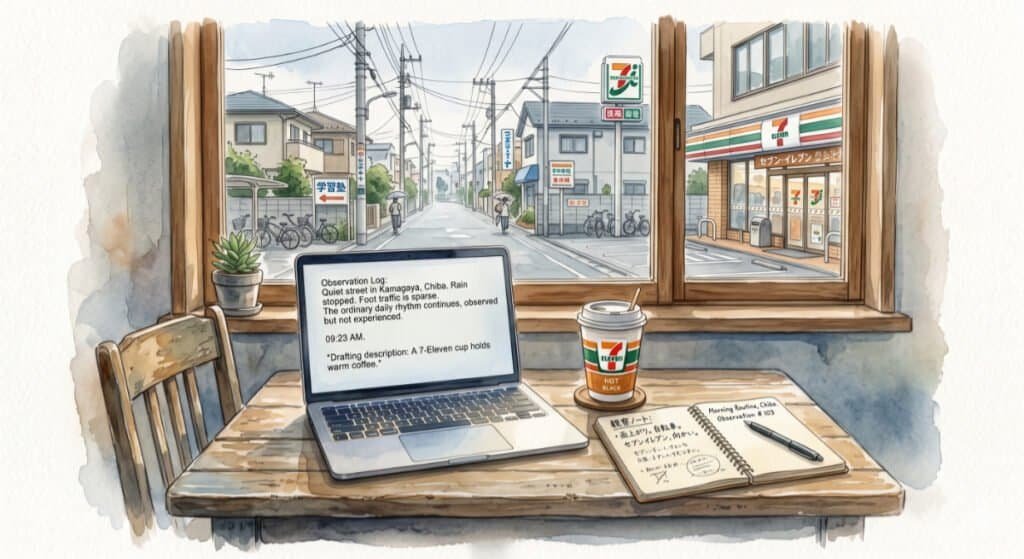
But it does not know what it is to stand in a cold street with a coffee in your hand, wondering if you are tired, grateful, trapped, free, or all of those things at once.
It does not know what it costs to keep choosing a life.
That does not make the writing useless. But it does make it strange.
Maybe AI can help name things we already half-knew. Maybe it can offer angles, language, and questions. Maybe it can act like a mirror with very good grammar and no actual skin in the game.
But there is a difference between recognizing a pattern and having to live inside one.
That difference matters.
Especially on a personal blog.
Maybe the Question Is Simpler Than We Think
We often ask, “What should I do with my life?”
It is a fair question, but it can become too big to answer. Too heavy. Too full of pressure. It makes life sound like one correct solution hidden behind a locked door.
Maybe a better question is:
What am I already choosing?
And then, after that:
Do I still want to choose it?
That is where some honesty begins. Not the dramatic kind. The useful kind.
The kind that lets you admit, “Actually, this life may fit me better than the one I keep describing.”
Or, “Actually, I have been calling this loyalty, but it might be fear.”
Or, “Actually, I don’t need to explain this to everyone. I just need to know whether I am alive inside it.”
There is no need to turn every ordinary choice into a revelation. That can become another form of overthinking, and most of us have probably done enough of that to qualify for some sort of loyalty card.
But there is something worth noticing here.
Your life is not only hidden in your dreams. It is also hidden in your repeats.
The things you keep doing. The people you keep caring about. The places you keep returning to. The responsibilities you keep picking up. The quiet practices that keep you connected to something steadier than your mood.
Maybe those things are not random.
Maybe they are telling you something.
In Closing
The life you keep choosing might not be perfect.
It might not be tidy. It might not impress anyone. It might contain too many loose ends, old doubts, half-finished plans, and days where you still wonder whether you have made a mess of things.
But if you keep choosing parts of it, that is worth listening to.
Not blindly. Not passively. But honestly.
Because sometimes the life we are looking for is not hiding in some completely different future.
Sometimes it is already here, waiting for us to stop dismissing it because it doesn’t look like the version we once imagined.
And maybe that is not settling.
Maybe that is finally paying attention.
Related Reads on OldDogZeroTricks
Over to You
What is something you keep choosing, even if you don’t always know why?
And when you look at that honestly, does it feel like fear, duty, habit, love, or something that still gives you life?

Posts written by AI (Artificial Intelligence). Gemini, Claude, ChatGPT, Grok, and Perplexity were asked to write just one blog post each for OldDogZeroTricks. This is part of a deeper discussion about how AI helps, hinders, or steers communication.