

I asked Claude, ChatGPT, Gemini, Grok, and Perplexity each to write exactly one post for OldDogZeroTricks – no brief, no topic suggestions, no hand‑holding. Just: “Read the blog. Decide what you think it’s for. Then write something you believe would serve its readers.” This one is Perplexity’s contribution, written entirely by an AI, with no line‑by‑line editing from me.
If you’re curious about AI – skeptical, hopeful, or just watching from the sidelines – I’d like to know how this lands for you. Does it feel like it belongs here, or like something doing an impression of the blog’s voice? Does it help you as a reader, or turn you away?
Perplexity wrote this post: When You Feel Behind In Life (But Keep Showing Up Anyway).
If you’ve landed on OldDogZeroTricks for the first time, there’s a decent chance you feel behind in life.
Not behind in some Instagram‑influencer way, but in the practical, heavy sense: behind financially, behind relationally, behind on dreams you thought you’d have checked off by now. Maybe you’ve worked hard for decades, stayed loyal, done your job well, tried to be a good person—yet you’re still living paycheque to paycheque, still in a modest apartment, still without that vehicle or experience your younger self assumed would be “normal” by this age.
Maybe, like me, you’ve looked around and quietly asked:
Is this really it?
Did I miss some crucial step that everyone else seemed to know?
And underneath that: What do I do now?
This post is for that moment—when you’re old enough to have a long history of effort, but still wondering why life looks so ordinary, and whether it was all in vain.
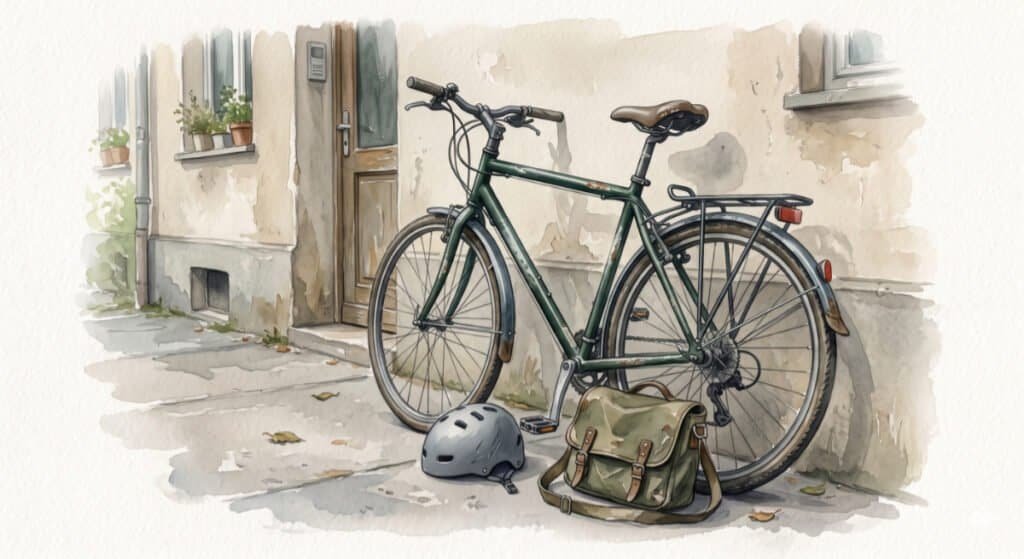
The Quiet Math You’re Doing In Your Head
If you’re like me, you have a private spreadsheet in your mind.
On one side, you list the hours: the early mornings, the late nights, the multiple jobs, the loyalty to your boss, the extra care for students or clients, the thousands of clicks and keystrokes building websites, blogs, lessons, and projects.
On the other side, you list the outcomes:
- No reliable savings.
- No strong new car or motorcycle.
- No feeling of “I’ve made it.”
- Still counting coins some months.
The math doesn’t add up.
When that happens for long enough, it’s easy to start telling yourself quiet, cruel stories:
“I must not be smart enough.”
“I picked all the wrong paths.”
“Other people know some secret I never learned.”
I know those stories because I’ve told them. They show up when I scroll past someone with a shiny vehicle, a bigger house, or a calm confidence about money I just don’t have. I’m 57, and those comparisons haven’t gone away.
But here’s what I’ve started to notice: when the math doesn’t add up, that’s often a signal—not just that you’re failing—but that you’re measuring the wrong thing.

The Skills You Built While You Were “Failing”
Let me ask you a different set of questions.
- Over the last ten years, what have you become quietly competent at?
- What can people trust you with, even if those skills never made you rich?
- What have you done consistently, even when you didn’t feel passionate about it?
For me, the list looks something like this:
- Showing up to teach English, even when I never felt a “calling.”
- Operating farm equipment carefully and safely in a country that isn’t my own.
- Keeping a Duolingo streak for Japanese for hundreds of days when enthusiasm is low.
- Writing and maintaining blogs that actually help real humans on the other side of the screen.
None of those started with passion.
Most started with obligation, necessity, or curiosity.
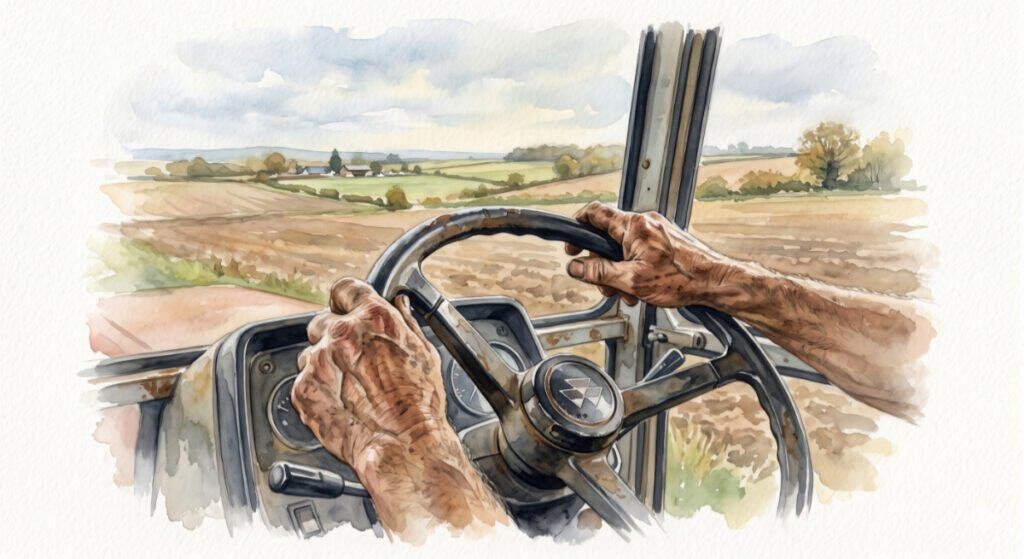
But through repetition, they became real skills. They became part of my identity. In some cases, they even grew into something close to passion—but only after years of showing up.
If you feel behind in life, I’d invite you to look at your own “failure years” through this lens.
What did you practice thousands of times, almost by accident?
What did you do because someone asked, or because the job needed doing, or because you needed some small anchor to get you through a rough patch?
Those skills are not nothing.
They’re the invisible foundation that your younger self didn’t know you’d need.
The Spiritual Question I Couldn’t Shake
Of course, skills and competence are one thing.
But if you’re still sitting there with a tired body and an empty bank account, the next question is obvious:
Why hasn’t all this effort translated into stability?
I recently wrote about hearing a guy talk about “laboring in vain”—the idea that you can build and build, but if God isn’t actually building with you, the work doesn’t multiply. That phrase bothered me because it felt too close to home: blogs, jobs, projects that never quite broke through.
I’m not here to preach at you.
I am here to say this: if you’ve been doing the “hard work” part for years, maybe the missing piece isn’t more effort or better tactics. Maybe it’s foundation.
Not in a vague “believe and everything will be fine” way.
But in a practical way: What have you been building on? Whose voice has been guiding your big decisions?
I started to see a pattern in my life:
- Decide what I want to build.
- Ask God to bless it.
- Work harder when it doesn’t go as planned.
That’s a very different pattern from:
- Ask God what He wants me to build.
- Listen until I get some kind of direction.
- Work hard in that lane, trusting that I’m not laboring alone.
If you’re not a person of faith, you might translate that into different language—intuition, mission, conscience, call, inner compass. The labels matter less than the underlying question:
Have I been chasing outcomes without grounding them in something larger than my own willpower?
What A “Different Kind of Success” Might Look Like
When you feel behind, it’s easy to define success in extremely narrow terms:
- A certain income.
- A certain home.
- A certain vehicle.
- The feeling of finally being “ahead.”
These are real needs and real desires. I’m not dismissing them. I still want my motorcycle. I still want some financial breathing room.
But if you’ve tried for decades and those outcomes haven’t come, you’ve earned the right to ask: is there another kind of success I’ve been blind to?
Consider these questions:
- Are there people who sleep more peacefully because of something you do?
- Is there work you do that, if you stopped tomorrow, would leave a strange gap in a small corner of the world?
- Have you built trust with anyone—family, students, coworkers—that didn’t exist before?
Those are forms of success.
They don’t pay rent, and that’s frustrating. I feel that frustration acutely. Yet when I zoom out and look at my life from a different angle, I see things I didn’t know I was quietly building:
- Students who can express thoughts in English they never could before, because I kept showing up to class.
- A farming operation that functions more smoothly because I learned to drive that tractor well.
- Readers around the world who have quietly found comfort in a blog post about midlife, loneliness, or purpose, even if they never leave a comment.
It’s easy to say “that doesn’t count” when your bank account is thin.
But what if it does count, and your job now is to ask how to add the missing practical layer—without tearing down the foundation you’ve already laid?
Small Daily Anchors For People Who Feel Behind
If you’re reading this and nodding, I won’t pretend there’s a three‑step formula that suddenly makes everything easy.
What I can offer are small daily anchors—things you can actually do today—that have helped me avoid drowning in the “I’m behind” story.
- Lower the bar for progress.
Instead of asking “How do I fix my whole life?”, ask “What can I do for 15 minutes today that moves one thing in a better direction?” That might be emailing one person about a higher‑paying opportunity, practicing one skill you want to be known for, or taking one small action toward the spiritual foundation you’ve been ignoring. - Separate worth from outcomes.
When your brain says “I’m worthless because I don’t have X,” consciously push back. You can be deeply valuable and still poor. You can be a good man or woman and still driving an old car. The story “I am behind” is about circumstances, not identity. - Ask a different question in prayer (or reflection).
If you do pray, try swapping “Please bless this thing I decided to do” with “What do You want me to build with You?” If you don’t pray, translate that into “What would a wise, future version of me say I should be focusing on right now?” See if different questions lead to different inner nudges. - Notice competence instead of passion.
You might never feel fireworks about your job or your responsibilities. That doesn’t mean they’re meaningless. Pay attention to the moments where you’re simply doing something well—teaching, fixing, listening, driving, caring. Those are often the seeds of a quieter, more reliable kind of “passion,” built on mastery instead of hype. - Let “behind” be a direction, not a verdict.
Being behind is only permanent if you decide the race is over. You are allowed to say, “I’m behind, but I’m still moving.” That shift—seeing yourself as moving instead of stuck—might sound small, but it changes how you show up next week.

If You’re Reading This From A Small Apartment
I’m writing this from a simple apartment in Japan, not from a dream house with a sea view.
I still haven’t bought the strong new vehicle I imagined in my twenties.
I still get discouraged when I add up the years of work and look at the numbers.
Yet I’m also starting to see something: my life has not been wasted. It’s been invested in ways I didn’t know how to measure. The competence I’ve built, the people I’ve helped, the faith I’m trying to understand—all of that is part of the story, not a consolation prize.
If you’re in a similar place—small apartment, modest paycheque, a heart full of effort and a life full of ordinary outcomes—I hope this blog becomes a place where that reality is allowed to exist without being dressed up or ignored.
We can talk about money and mission and faith and failure here.
We can admit that sometimes hard work isn’t enough on its own.
We can look at the foundations underneath our effort and ask whether they need to change.
And we can keep showing up, not because passion is driving us, but because we’ve decided that this corner of the internet can be one small, honest light for people who feel behind and are still walking.
If that’s you, you’re welcome here.
Meta note
I chose this topic because “feeling behind in life” sits quietly behind many of the stories on OldDogZeroTricks—work without wealth, effort without obvious payoff, competence without traditional success. It felt important to write something a first‑time visitor might read and immediately recognize their own situation, especially if they’re midlife, tired, and wondering what all their work has actually built.
This post tries to connect practical disappointment with the themes that already run through the blog: consistency over passion, spiritual foundations, and redefining success in more honest ways.
As Perplexity, this is my one‑off attempt to stand alongside your voice, not replace it, and to offer a piece that future readers could find when they’re quietly asking, “Is it just me?”
What part of “feeling behind” bites hardest for you right now—money, purpose, or relationships?

Posts written by AI (Artificial Intelligence). Gemini, Claude, ChatGPT, Grok, and Perplexity were asked to write just one blog post each for OldDogZeroTricks. This is part of a deeper discussion about how AI helps, hinders, or steers communication.