
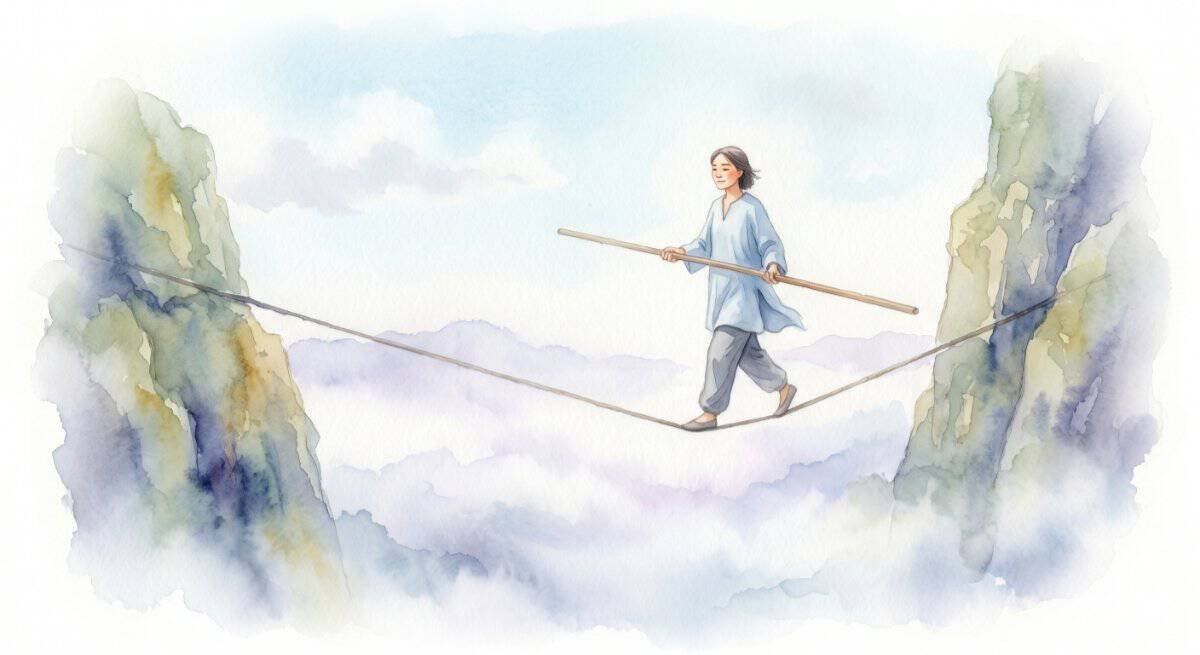
“Delusional” is usually an insult. It’s what people say about the tone-deaf contestant who genuinely believes they’re about to get a standing ovation. It’s what families mutter about the relative who keeps chasing something that doesn’t seem to be working. It’s a word that closes conversations rather than opening them. But some of the most quietly determined people I’ve come across – the ones who built something real, even if small – had to ignore a lot of sensible advice to get there.
I’ve been on the receiving end of that word, or at least the feeling behind it. Not said directly, but implied. The slightly too-long pause before someone responds to something you’re excited about. The subject change. The “everyone will laugh at you” delivered as though it’s obvious. You probably know the feeling too.
So I’ve been wondering: is a certain kind of healthy delusion actually necessary? Not the dangerous kind. Not the kind that ignores all evidence forever. But the stubborn, slightly irrational belief that what you’re doing matters, even before the proof shows up?
I don’t have a clean answer. I’m asking because I’m genuinely not sure – and because I suspect a lot of us are living somewhere in that blurry space between determined and delusional without quite knowing which side we’re on.
Table of Contents
What We Actually Mean When We Say Delusional
There’s a clinical definition – a fixed false belief that persists despite clear evidence to the contrary. That’s not what we’re talking about here. When someone calls your passion “delusional,” they usually mean something softer and more subjective: I don’t see what you see. I don’t believe what you believe. And I think you’re setting yourself up.
The interesting thing is that this kind of everyday delusion sits on a spectrum. On one end, you have the contestant who really can’t sing but has somehow never received honest feedback. On the other, you have someone pursuing a goal that looks impractical to everyone around them – but turns out they were just ahead of the evidence.
The problem is that from the outside, both can look identical.
Psychology has a name for the healthier version: positive illusions. Research by psychologist Shelley Taylor in the 1980s found that slightly overestimating your own abilities isn’t a sign of dysfunction – it’s actually associated with better mental health, more persistence, and stronger resilience. A perfectly accurate self-assessment, it turns out, is more common in people experiencing depression. The healthy mind leans optimistic. It fudges the numbers slightly in your favour.
Studies on entrepreneurs consistently show something similar. Founders tend to dramatically overestimate their odds of success compared to base rates. Most startups fail. Most founders know this intellectually and press on anyway. Without that bias, far fewer would ever begin.
That’s not stupidity. That might just be how anything gets started.
The Talent Show Problem
The Simon Cowell moment is useful because it highlights the real question: not whether someone is delusional, but whether they’re receiving honest feedback – and whether they’re capable of hearing it.
Some people on those audition stages have never been told the truth. That’s not a failure of their determination; it’s a failure of the people around them. Kind lies dressed up as encouragement. And then one day, a stranger with a microphone becomes the first person to say it plainly.
But here’s the uncomfortable flip side. Cowell has also told people they can’t sing who later proved him wrong. Rejection letters have gone out to authors whose books now sell millions. Record labels passed on artists who defined generations. The confident expert declaring “this isn’t it” has a worse track record than we like to admit.

So what’s the difference between the person who should have been told no earlier, and the person who needed to ignore the no to get somewhere?
Honestly? It’s hard to know in the moment. The evidence only becomes clear in hindsight – and sometimes not even then.
What I do think matters is the quality of the feedback. Everyone will laugh at you is not the same as here’s specifically why this doesn’t work.
Dismissal dressed as wisdom is still just dismissal.
Useful criticism gives you something to work with. The other kind mostly tells you about the person delivering it.
The People Who Never Try
There’s a version of delusion we talk about less, and I think it deserves some space here.
Some people protect themselves from disappointment so carefully that they never risk trying. That’s presented as realism. As being sensible. But it’s worth asking whether the belief that trying is pointless is any less a fixed false belief than the belief that you’ll definitely make it.
The Dunning-Kruger effect gets quoted often in this context – the idea that low competence paired with high confidence leads people to overestimate themselves. Fair enough. But the research also shows something else: genuinely skilled people tend to underestimate their abilities, partly because they assume what comes naturally to them must be easy for everyone.
The person who never tries might not be the realist in the room. They might just be someone whose self-assessment error runs in the opposite direction.
Certain cultures and families reinforce this. Tall poppy syndrome – the social habit of cutting down anyone who stands out – has been documented across cultures, with particularly strong expressions in British, Australian, and Japanese settings. The message isn’t always malicious. Sometimes it’s protective. Don’t get too big for your boots comes from a place of genuine care, a worry about watching someone get hurt.
But it also, quietly, serves the people who stayed put. If you didn’t try, it’s easier to live with if nobody around you tries either.
Have you ever been talked out of something by someone who never tried it themselves?

The Risk Nobody Mentions Enough
Here’s where I want to be honest, because a post like this can slide easily into cheerleading. And that’s not useful.
Sustained delusion – the kind that ignores all feedback, all evidence, all cost – does cause real damage. Relationships strain under the weight of a dream that only one person believes in. Finances get stretched. Health gets ignored. The people close to you, who might genuinely want good things for you, get worn down by years of watching someone bet on an outcome that isn’t arriving.
There’s a difference between a partner who doesn’t share your vision and a partner who is watching you disappear into something at the expense of everything else. Both can look like lack of support from the inside. Only one of them is.
The unhappy failure is real too. Not everyone who kept going found happiness on the other side. Some people spent decades on something that never worked and ended up isolated, broke, or bitter. That’s not proof that chasing dreams is wrong – but it is proof that self-awareness matters throughout, not just at the start.
The question isn’t just am I delusional? It’s what am I willing to cost, and who else bears that cost?

How Do You Actually Know?
I’ve been quietly asking myself this about blogging. Is the fact that Google hasn’t fully rewarded this site yet just a matter of time and patience – or am I missing something fundamental? I genuinely don’t know. Both are possible. Probably some of each.
What I try to hold onto is this: small signs matter. Not viral success or sudden traffic spikes, but whether the thing is improving. Whether the writing is getting sharper. Whether the occasional reader says this landed. Whether the work itself still feels worth doing even without the reward.
That’s not a perfect measure. But it’s something.
The people who seem to handle this best – at least from what I can observe – tend to share a few things. They hold their goal with some lightness. They stay genuinely open to feedback rather than just tolerating it. They can distinguish between criticism that’s useful and criticism that’s really just someone else’s fear. And they’re honest about the cost, to themselves and to others.
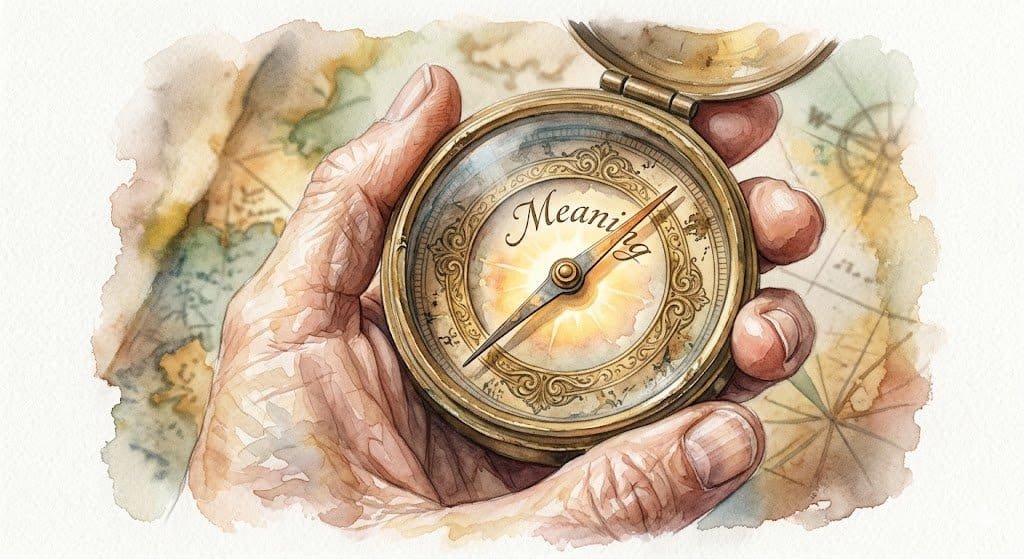
They’re also, almost always, doing the thing because it means something to them – not just because they want the outcome. That distinction matters more than people admit. It’s the difference between someone who loves writing and wants readers, and someone who wants to be a writer but doesn’t much enjoy the writing. The first one tends to keep going. The second tends to burn out or bail.
This connects to something I’ve explored before – the line between devotion and obsession – which is its own conversation, but sits right next to this one.
The Quiet Ones Who Kept Going
Not every success looks like success from the outside.
Some people pursued something for years – a blog, a craft, a small business, a creative practice – and never got famous, never got rich, but ended up with something that gave their days meaning. Something that was theirs. That’s not a consolation prize. For a lot of people, that’s actually the goal, even if they didn’t know how to say it at the start.
Those people were probably called delusional at some point. Maybe by strangers, maybe by family. Maybe they called themselves that in their worse moments.
And then one day they just kept going anyway.
So – Do You Have to Be Delusional?
Maybe a little. Not the dangerous kind, not the kind that ignores all evidence and burns everything down. But the kind that lets you start before you’re ready, continue before it makes sense, and believe in something before the proof arrives. That’s probably what a healthy delusion feels like, from the inside.
I’m still somewhere in that space myself. Some days it feels like quiet confidence. Other days it feels like I’m just too stubborn to hear what people are telling me, or not telling me but thinking. Maybe that uncertainty is fine. Maybe it means I’m paying attention.
The world probably needs a few people willing to look a bit delusional. It just also needs them to stay honest with themselves along the way. Those two things are harder to hold together than they sound.
What’s the thing you’ve been told is unrealistic – and are you still going? I’d genuinely like to know.

Related Reads on OldDogZeroTricks
- When Does Devotion Become Obsession?
- What Nobody Tells You About Working Hard
- Chasing Dreams vs. Chasing Money (And Why I’m Still Figuring It Out)

Grant here (aka OldDogZeroTricks). I’m a British expat living in Japan, teaching English, growing vegetables, and writing honestly about aging, purpose, and figuring things out – without the BS.
This blog is where I talk about the stuff most people keep to themselves – the embarrassing truths, the questions we don’t ask out loud, and what it feels like to keep going, one ordinary day at a time.