
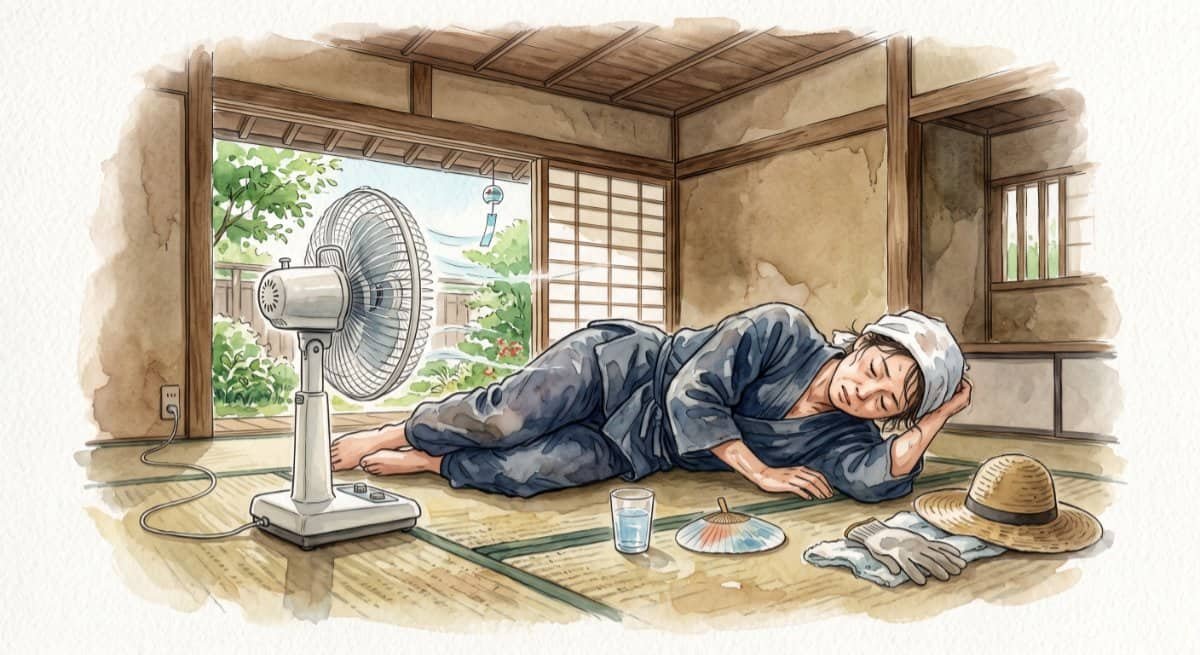
There are plenty of sensible reasons to have air conditioning in Japan. And I’m not recommending that anyone copy my stubbornness.
Table of Contents
Morning in a hot third‑floor apartment
As I start to draft these thoughts at around 8 AM on a day off, the clock by my desk shows 33.3 degrees, and 47% humidity. The head-level fan standing about 40 centimeters to the left of my face is also showing 33 degrees.
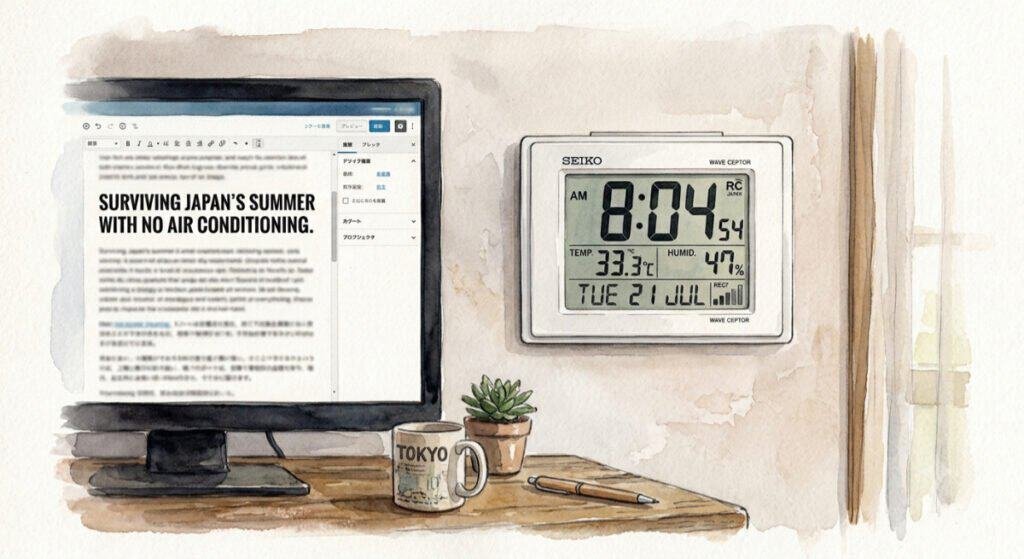
This old Japanese building where I’ve lived for years is three storeys high, and I live on the top floor. I think some of the heat from the apartments below creeps up to this floor. That seems obvious when I open my bathroom door and it smells so hot and humid in there even though I keep that door open for most of the day so the apartment can breathe.
Unlike some taller buildings, there’s rarely a decent breeze blowing through the open windows. My room is an old tatami room with a carpet laid over the tatami.
People with air conditioning probably decided the summer was “officially bad” a couple of weeks ago. But for me – after cycling home from the farm yesterday and spending the night trying to sleep without sweating – it’s clearly the beginning of the challenging season.
There is a distinct silliness in living like this at almost 58.
My farming boss reminds me every year to just ask the housing agency to install an AC unit. He’s right, and I feel a bit foolish for not bothering. Yet, there is a quiet contentment in knowing I can manage without it.
It’s a choice that forces a question I keep returning to when the heat sets in: At what point does stubborn discipline stop being admirable and start being self‑punishment?
Coffee, showers, and accepting sweat
On an ordinary day off in other seasons, I’d already have walked to 7‑Eleven for groceries and coffee after a decent sleep. Today is different. I clearly need a shower before stepping outside, and I didn’t sleep much. The first warm night’s struggle is a bit of a shock I think.
In Japan’s summer, the shower becomes less daily habit and more mental health survival.
My shower room feels like the hottest place in the apartment. I like to wash in fairly warm water to feel properly clean, but the time spent standing in one place and away from any fans makes the whole shower experience not forgiving at all.
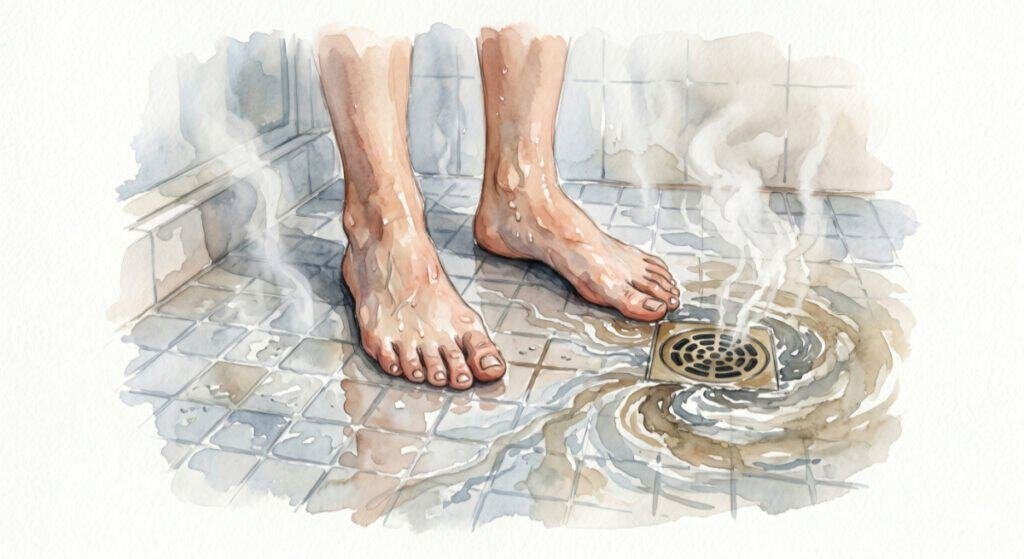
In fact, even if I was jogging outside in the heat, I wouldn’t be counting down the minutes as much as I do in that shower room.
Over the years, I’ve learned to stand closer to the door, where there’s just enough of a hint of cooler air to remind me of the promise of escape.
At the end of the shower, it’s essential (for me) to finish with 100% cold water.
By mid‑summer, the “cold” water is lukewarm at best, but it takes the edge off and makes the whole I‑survived‑the‑shower process a real possibility.
After showering and getting dry, it’s necessary to sit in front of the fans immediately or you start sweating again almost at once. There’s a rhythm to it: shower, towel, fans, new sweat, accept it.
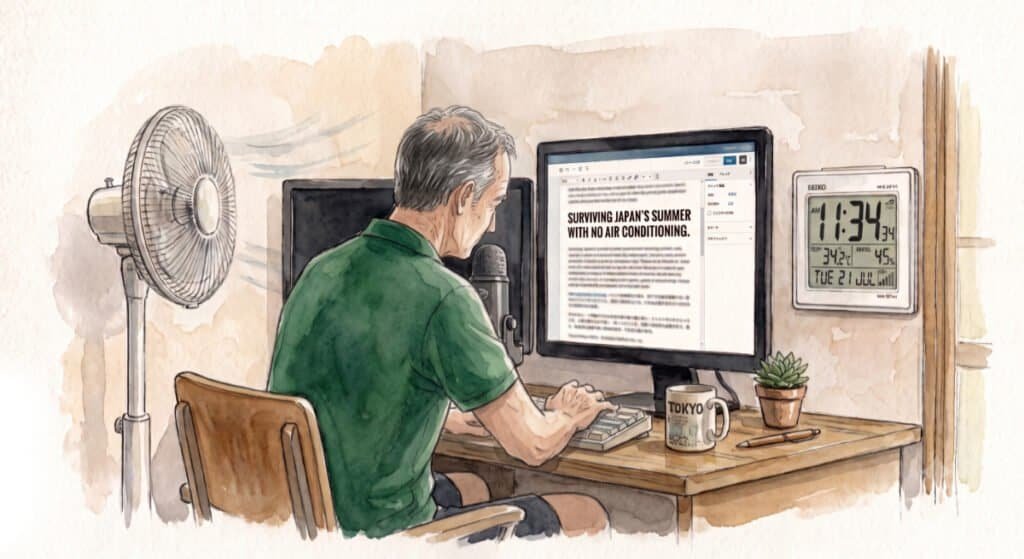
Later in the morning, around 11:34 AM, the clock reads 34.2 degrees with 45% humidity, and it seems the floor fan – fully extended and in my face like a middle finger – seconds that motion.
I’ve already popped to a couple of nearby stores for soap, toilet rolls, mosquito repeller refills, the usual groceries, and a couple of 7‑Eleven coffees.
It might sound strange to drink hot coffee when it’s boiling outside and in the home.
But I like to celebrate my days off with the little things I enjoy. A hot coffee or two can cheer me up, and by the time I’ve walked back from the shops, I’m already soaked in sweat anyway.
Plus, it was good to get out the apartment and get a few things done despite the heat and easy excuse not to venture outside. Keeping busy can become a simple way to keep checking in with ourselves.
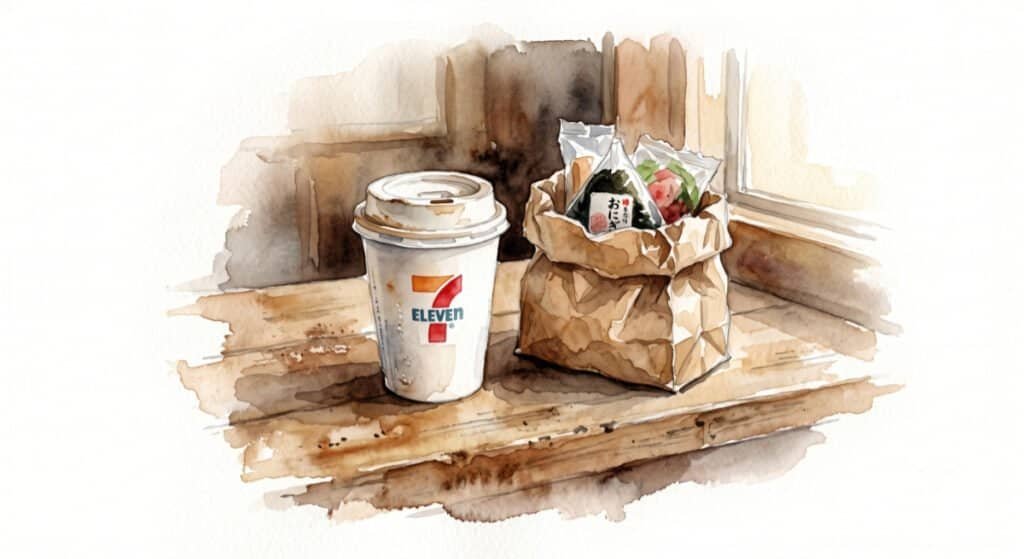
Why would you drink hot drinks if you hate sweating?
When it comes to clothes in the summer, there’s one thing you just have to accept.
Every item of clothing is going to be sweaty and unfresh pretty quickly, and almost instantly. So, whether you walk back from 7-Eleven with a small bag of groceries or slightly heavier stuff, you are going to be covered in sweat.
That being the case, it really makes little difference if you come home and decide to enjoy a frozen drink, or a couple of hot coffees. The fan is there blasting me in the face, but I’m already wet again. The sweat is simply newer and hopefully fresher than it was before the shower.
So, why not enjoy a hot drink if that’s your thing?
If you’re reading this drenched, there’s one small habit that helps me:
I keep one dry T‑shirt near the fan. After a shower or a trip outside, I might change into it, stand in front of the fan for a few minutes, and let my body and brain reset before deciding what’s next. It’s a tiny thing, but it helps in the moment.
Clothes, laundry, and living in green
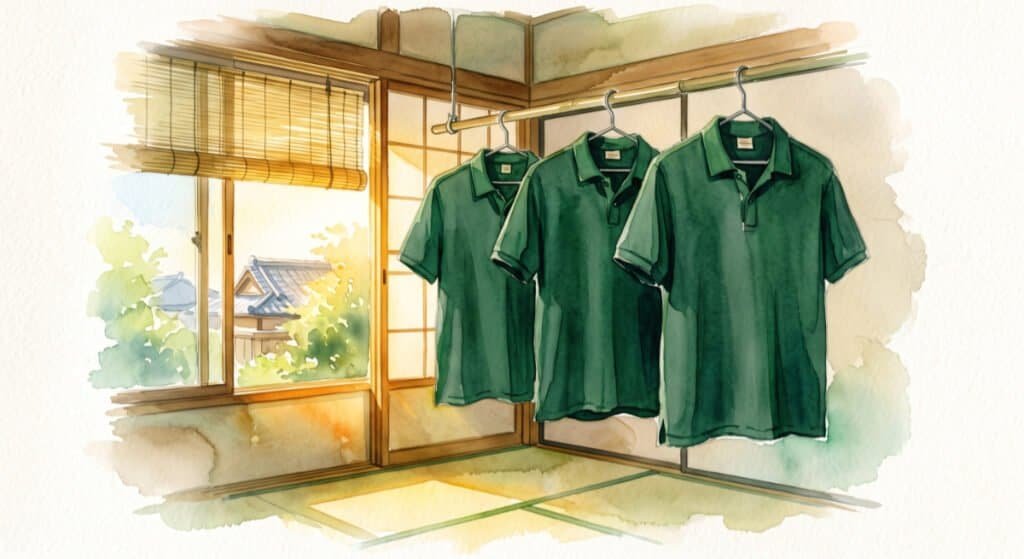
I go to the launderette once a week on a day off to wash my farming clothes and everything else. In the Japanese summer, you have to accept that you can’t wear the same item two days in a row.
As soon as an item of clothing touches your sweaty body, it’s essentially sacrificed for that day.
That’s not a tragedy, but it does mean planning. You need enough clothes to match the work schedule and the heat.
Since I’ve been farming, I’ve gravitated to wearing more casual clothes, and the color green resonates more, and feels OK for middle age – be it teaching, farming, shopping or whatever. One of my schools closed some months ago, and now I teach some of those former students online.
If you don’t enjoy clothes shopping, you might do what I did and simply buy six or so green polo shirts to satisfy the week’s schedule. With this summer heat and humidity, it feels fine to pluck a daily shirt from the hanging laundry and automatically keep count of how many are left until laundry day.
Working outside: when the heat wins
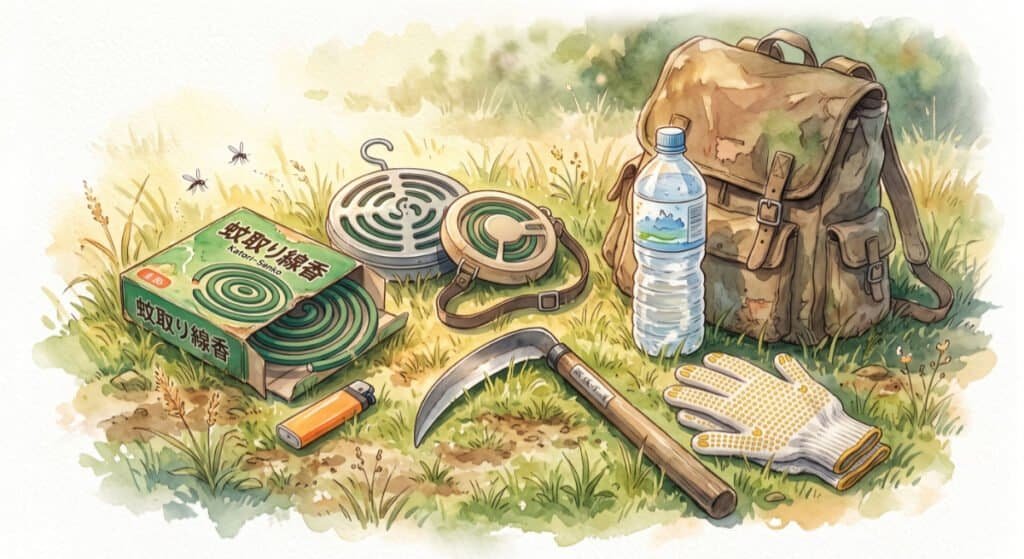
I enjoy working outside. Farming gives me an excuse to exercise, be in nature, work hard, and be casually dressed. But in summer, the heat chips away at your resolve very quickly.
On paper, you might hope to work seven or eight physical hours outdoors.
In reality, under direct sun or inside a greenhouse with a plastic roof, the summer heat can drain your energy by lunchtime.
Early mornings are golden; that’s why many farmers start at uncomfortable hours. That’s the window before the weather gets too hot. After that, working outside might actually be unhealthy if you’re starting to struggle.
It’s easy to say “just drink more water,” and yes, hydration matters. The challenge is that drinking a lot at once makes you sweat even more, and your clothes and mood can cross the line from “hot” to “drenched, uncomfortable and annoyed.”
So I’ve had to find a middle path:
- Drink small amounts regularly, not huge amounts all at once.
- Add a bit of salt or electrolytes sometimes, or drink sports drinks, so the water isn’t just passing straight through.
- Consider buying frozen sports drinks, so you can’t drink too much at once.
- Accept that extra sweating is part of the deal and focus on what helps you stay comfortable and functional.
Last week, because of the heat, I looked through the Workman catalogue for better work clothes and plan to pick some up on payday.
Professionals who work outside in the heat know which clothes help and which don’t. I tend to wear short‑sleeved T‑shirts with my arms exposed, which probably looks unprofessional to some. Yesterday I was cutting grass in an outdoor greenhouse with a plastic roof but open sides, and the heat was doing its thing.
When I got home, I sat and lay on the floor in front of the fan for about an hour before I could even think about a shower.
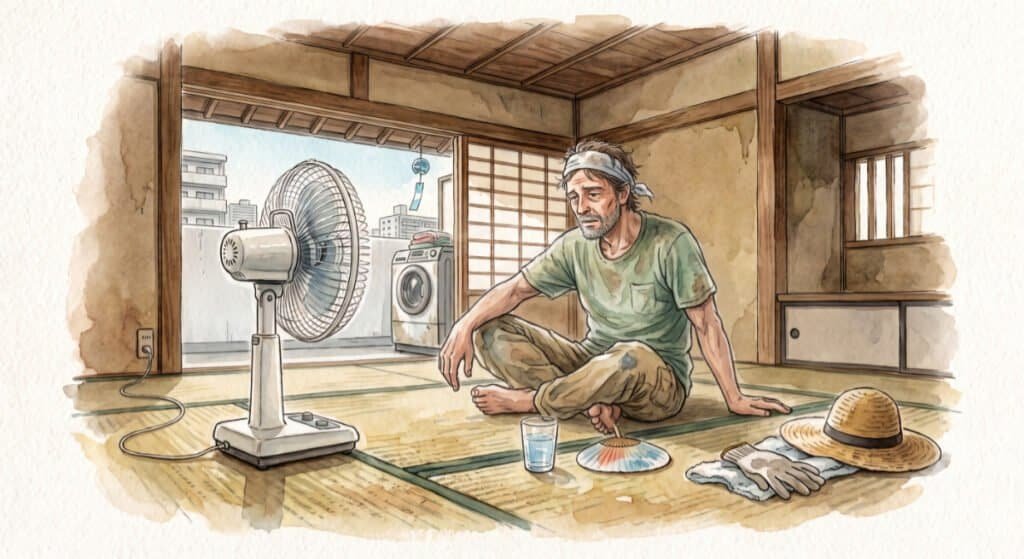
It’s easy for us guys (and girls) to judge ourselves on discipline and toughness, especially as we age.
I’m pretty sure summer didn’t feel this intense a few years ago, though back then I wasn’t living alone.
Old summers, frozen bottles, and stubborn values
Thinking about the older summers makes me respect my ex‑wife (and her daughter) a lot. We lived in this same hot apartment for years with no AC. The fans I’m using now are the exact ones we bought and carried home together from the store.
When you live with others, especially family, you care about their wellbeing in a more active way.
Back then, I’d put large frozen bottles of water behind the fans so they acted a little like a homemade air conditioner. We soldiered through quite a few summers that way.
More recently, catching up with my good friend Gary over email, he reminded me that we all still feel like young teenagers in older bodies.
From that perspective, it makes sense that I don’t have AC and still enjoy the self‑discipline that summer (and winter without a heater) requires.
The values I had when I was younger – about discipline, basic comfort, and not wanting to rely on less natural solutions – haven’t changed that much.
Truth be told, I don’t get visitors, so whether there’s air conditioning here is neither here nor there for anyone else.
At what point does stubborn discipline stop being admirable and start being self‑punishment?
I suppose that’s the question under all of this: I don’t always have an answer. I just know I still lean towards self‑discipline by default, and try to focus on getting by.
Small Japanese summer habits I notice
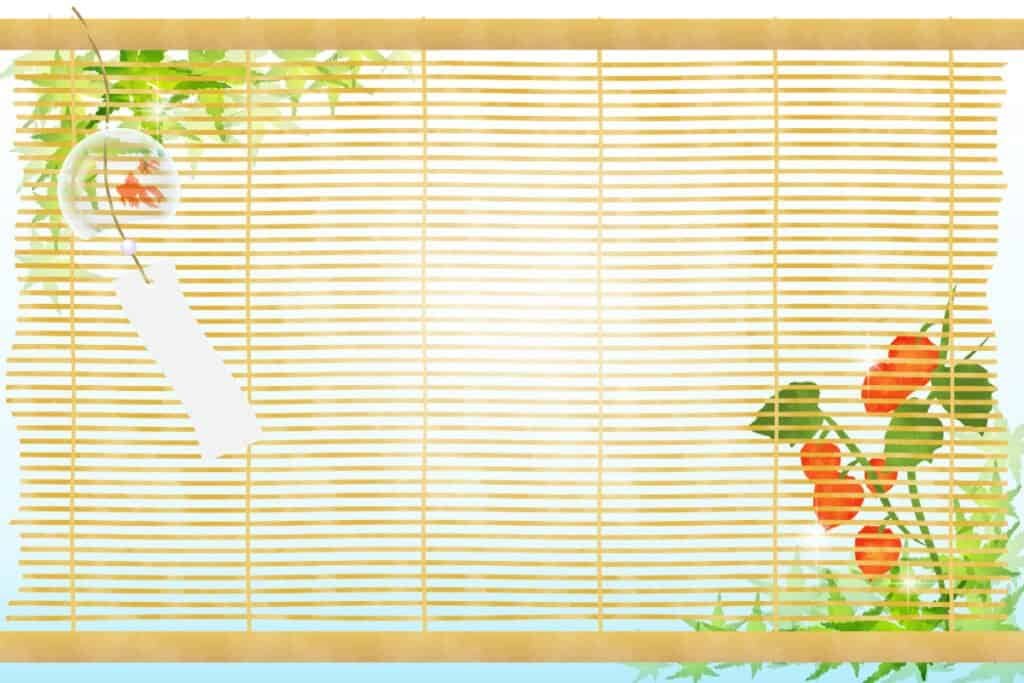
Living in Japan, you notice how people handle the heat with a mix of old and newer habits.
Around the neighbourhood, you might see uchimizu (打ち水), where people sprinkle water outside homes or shops to cool the ground a little as it evaporates.
You notice uchiwa (うちわ) hand fans, electric fans in doorways, and other fans placed strategically to catch whatever breeze there is.
You see sudare (簾) or bamboo shades hung outside windows to help block the sun before it turns the room into an oven.
You see people drinking mugicha (麦茶), the cold barley tea that seems to appear everywhere in summer.
In recent years, you also see battery-operated handheld fans held up to faces on trains, on streets, and at work.
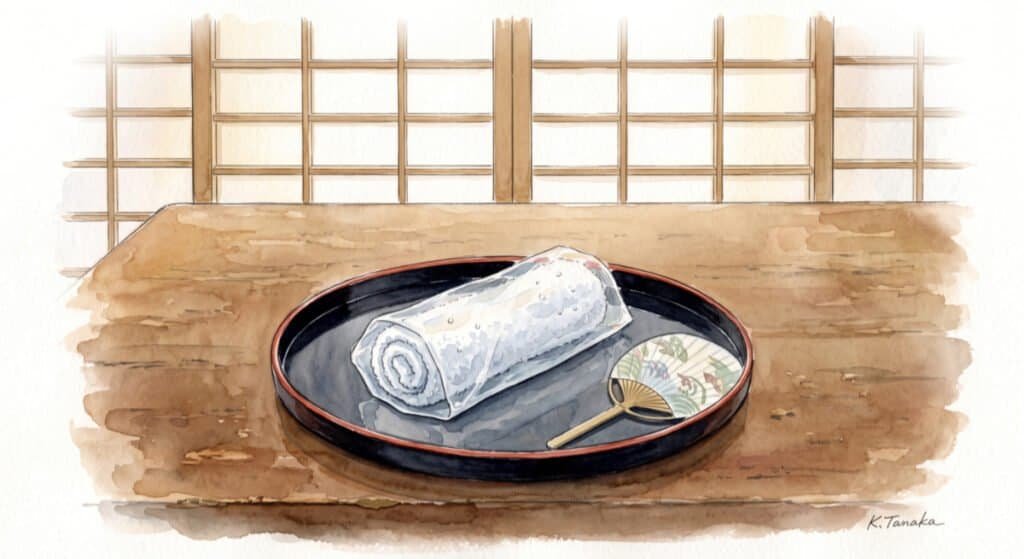
At work just last week, I arrived to find a cold towel waiting on my desk, wrapped in a thin plastic bag, ready to freshen me up before the first student arrived. An unexpected but welcome comfort from the sauna outside.
There are also the more ordinary summer habits:
People wear lighter clothes, often with T-shirts underneath regular shirts to absorb sweat. Some workplaces still lean on Cool Biz (クールビズ), the idea that summer comfort matters more than a tie and formal stiffness.
And of course, this is not just a Japanese thing. Other countries do sensible versions of the same sort of thing. But Japan has a very clear summer rhythm, and you notice it more once you live through it.
Noticing these habits reminds me that living without AC is not some strange personal experiment. It was the norm here for a long time, and in many places people still rely on simple, practical ways to get through the heat.
Night survival: fans, mosquitoes, and heat
The toughest part of summer in Japan without AC is often the night. Last night felt like the first truly tough hot night of the year. I was grateful that today was a day off, with less pressure to sleep well and show up for work all bright‑eyed.
When the room is this hot, you start calculating little heat‑related things:
- I’d have loved to load up Apex Legends and relax for an hour to take my mind off the heat. But I didn’t, because I know the PC’s graphics card would pump even more heat into the room right before bed.
- The electric mosquito repellers get slightly warm, but they’re essential if you want an undisturbed sleep with the windows open. Japan’s summer mosquitoes will happily remind you why those devices exist.
- Fans need to be placed strategically: one pulling air in or out of the room, and especially for me – one pointed at the bed so you can feel the wind on your skin.
Sleep helps with everything of course, including not obsessing over how much you’re sweating.
On good nights, I time a lukewarm evening shower so there’s enough time for my body to cool a bit before bed. Just washing away that sticky sweat feeling can make getting into bed much more comfortable.
Many Japanese shower in the evening before bed, while people in the West often prefer the morning. In summer, though, showering at both times can make sense.
One upside of not having AC is that, while the apartment can feel punishing, stepping outside doesn’t hit you like a wall. Because you’re already acclimatised to the heat, going outdoors often feels less shocking than it does for someone walking out of a cold room into a 34‑degree street.
The Occasional Respite
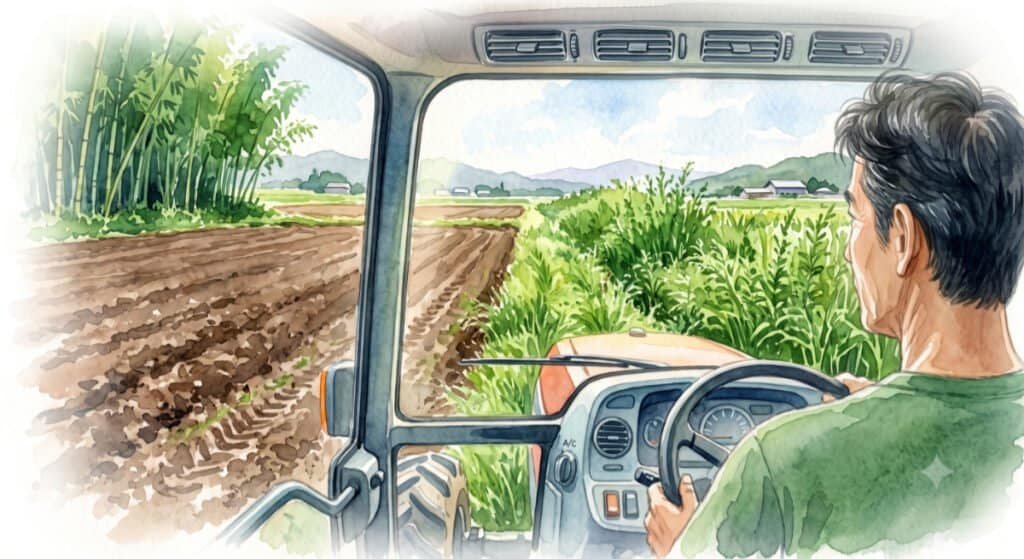
Fortunately, for a few days now (since I drafted the above), the humidity and temperature have been a little lower. That alone has made farming more bearable this week.
Then yesterday midday, my boss asked me to plough the fields with the tractor. This particular tractor has a closed cabin with air conditioning, and for about an hour it felt almost luxurious to climb inside, shut the door, and let the cool air do its work while I drove across the fields.
I enjoy driving machines anyway, so it was one of those moments when practicality and pleasure lined up neatly.
There is also something satisfying about seeing the before and after of the work: the tall green plants were grown to put nutrition back into the soil and help with insects, and then afterwards the field becomes plain, freshly ploughed brown soil.
For that hour, the summer lost its grip on me. I could sit upright, think clearly, and just enjoy the work.
My boss even joked that the tractor cab with AC must feel like heaven for someone who doesn’t have air conditioning at home!
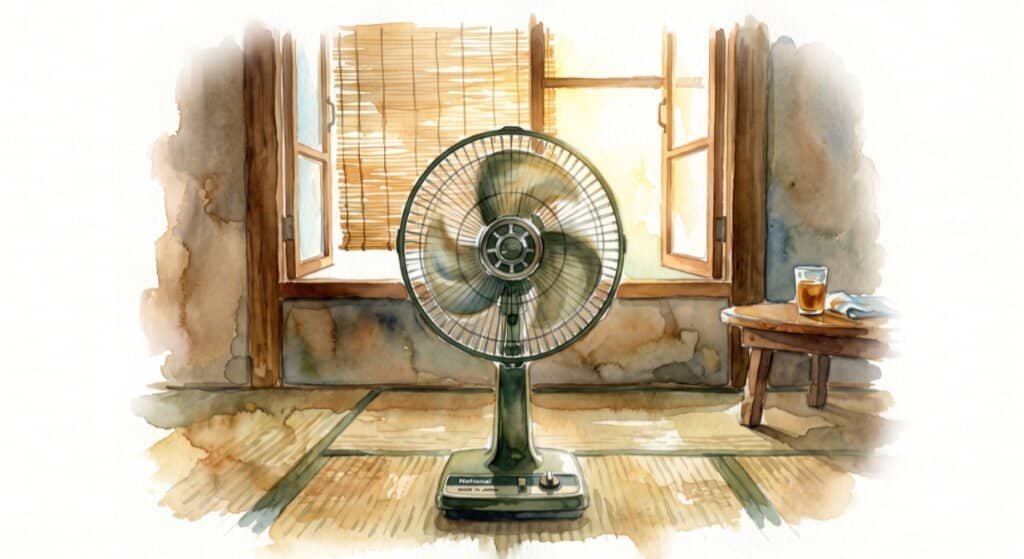
I think these little breaks in the summer heat can make a world of difference. You never know how long they’ll last, so it helps to be grateful for them when they come.
Money, health, and why I still have no AC
To be honest, not using AC obviously saves money. Electricity bills can jump sharply in summer with constant cooling. For someone balancing farming work, teaching, and just getting by in Japan on a budget, that matters.
There’s also a part of me that believes, rightly or wrongly, that adjusting to live naturally has some upsides, and that you do acclimatise if you can get through the summer safely.
Your body adjusts somewhat. I even used to imagine that the seasons help to keep us in check:
In the summer, we have a natural need to drink more water, and less of a desire to eat. In some cases, that kind of dieting or fasting might help someone.
Although, it might not look cool to be so slim at such a ripe age, for some people, a slimmer body might cope with physical work or summer stress more comfortably than a heavier one.
Warning: Here’s where I need to be sensible
This is where I want to be clear and not just get carried away with writing:
- If you’re elderly, have health problems, or live with children, I would not recommend copying my no‑AC approach. Real cooling can be the difference between a rough night and a dangerous one.
- If you’re relatively healthy, stubborn, and curious, there might be some value in gently testing your limits – but there’s no virtue in making yourself ill just to save a few yen.
- Quite honestly, living without air conditioning here in Japan seems to get more difficult the older I get. So, I can imagine my resolve weakening in time.
I lived in another apartment in Japan for while that had AC, and I rarely used it. So, even if it was installed in my current place, I imagine it would rarely get used. Maybe I’d put it on for an hour before bedtime in the summer only – sleep being the main thing to invest in.
I’m still OK with not having AC, as counter‑intuitive as that sounds.
For me, right now, the balance of money, discipline, and acclimatisation tips towards “just get on with it.”
What I’d tell someone sweating at 2 AM
If you’re reading this at 2 AM on your own hot floor in Japan or anywhere else:
- Consider taking a short, lukewarm shower and finish with a coldish rinse.
- Try to notice any flow or direction of air through your home or windows, so the fans aren’t fighting against it.
- Swap into one dry T‑shirt and sit or lie where the breeze reaches you, even if that’s the floor.
- If your situation is genuinely unsafe – if you’re dizzy, confused, or caring for someone fragile – please treat proper cooling as non‑negotiable.
- Consider placing frozen bottles of water on a tray behind (or in front of) fans to cool the surrounding air. (Be careful of any water droplets or condensation near any electrical wiring.)
For everyone else, this post is simply my field note from a hot third‑floor tatami room in Chiba. A reminder that some of us still live without AC because it’s just how our lives and values have turned out so far.
If you’ve got your own summer survival tricks, or strange comfort trade-offs, I’d be interested to hear them.
How do you get through summer where you are?

Related Reads on OldDogZeroTricks
- The Myth of the Dream Life (Or: Why I Smell Like Fertilizer)
- The Dignity of Making an Effort (And Finding Your Hard Reboot)
- Are You Too Comfortable? A Question To Consider

Grant here (aka OldDogZeroTricks). I’m a British expat living in Japan, teaching English, growing vegetables, and writing honestly about aging, purpose, and figuring things out – without the BS.
This blog is where I talk about the stuff most people keep to themselves – the embarrassing truths, the questions we don’t ask out loud, and what it feels like to keep going, one ordinary day at a time.