
Gaming at 57 isn’t what most people imagine, but maybe it should be. This is my take on being one of the older gamers still dropping into virtual battlefields: why play matters more than skill, what gaming gives me that “age-appropriate” hobbies don’t, and how refusing to act your age can be its own kind of wisdom. If you’ve ever dismissed gaming as “not for people your age,” here’s what this old dog has learned about play, connection, and staying gloriously mediocre at something that doesn’t matter.
Why Older Gamers Aren’t Giving Up Play (And Maybe You Shouldn’t Either)
Table of Contents
What Nobody Admits About Getting Older
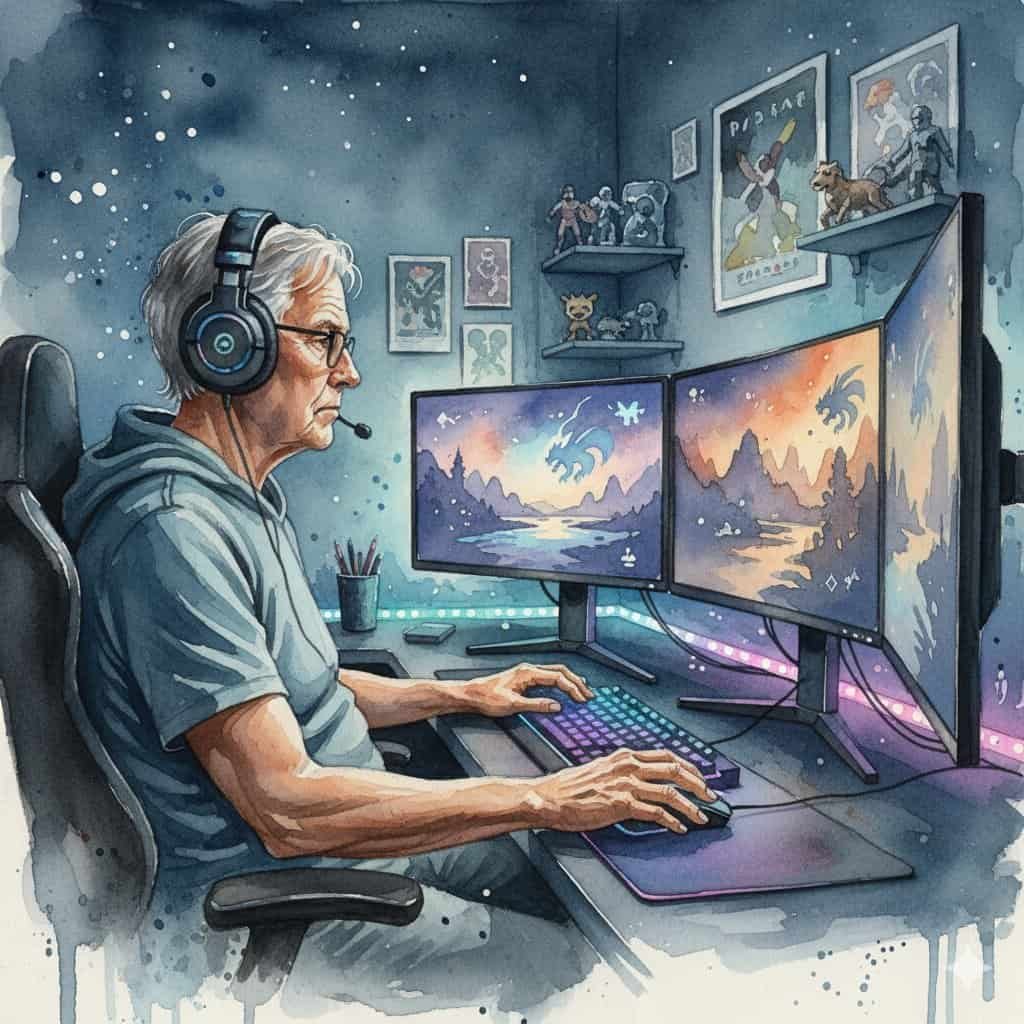
At 57, I probably shouldn’t be spending Sunday evenings competing against teenagers with lightning-fast reflexes in a video game. But here I am, one of life’s older gamers booting up Apex Legends for the third time this week, ready for another round.
My reflexes aren’t what they were at 25. My aim is mediocre at best. I’ll never make the leaderboards. And somehow, that’s exactly what I need right now.
Maybe you have your own version of this: the “silly” thing you still do that doesn’t match your age, the hobby people might judge, the activity that makes you feel like you’re supposed to be past this by now. For me, it’s gaming. And I’m not apologizing for it.
Have you ever felt too old for something you genuinely enjoy?
Why This Free Game Matters (And Maybe Your Version Does Too)
Let me tell you about Apex Legends, because if you’ve never tried gaming, or gave it up years ago thinking you were too old.. this might be relevant.
It’s a battle royale game. Sixty players drop onto an island, last squad standing wins. Fast-paced, gorgeous graphics, split-second decisions. And here’s the best part: it’s completely free. No cost to download, no subscription fees, no tricks. Just install it and play.
The gaming community has plenty of older gamers. You don’t hear about us because for the most part, we’re not streaming or making content.
I’m not sponsored. (Like anyone would bother!) Nobody’s paying me to say this. I just think people dismiss gaming as ‘for kids’ without realizing there’s a whole community of older gamers finding accessible, engaging experiences, and this one costs nothing to try.
After a week split between teaching English and farming, two jobs that demand patience and presence, I crave something that lets my brain go somewhere completely different. Apex provides that escape, even if escaping into a competitive shooter at this age sounds contradictory.
What do you do to completely shift mental gears after a demanding week?
The Liberation of Being Openly Mediocre
My username is “OldDogZeroTricks”, a fair warning to anyone who gets matched with me. You’re getting enthusiasm, not excellence. Don’t expect clutch plays or impossible shots.
There’s something freeing about being bad at something that doesn’t matter. Most of life requires some degree of competence: work, bills, responsibilities, and showing up properly for people who depend on you. But in a video game? You can be gloriously, unapologetically average and nobody gets hurt except your virtual character.
When was the last time you did something purely for fun, knowing you’d never be great at it?
Maybe your version isn’t gaming. Maybe it’s painting badly, singing off-key, playing recreational sports where you’re clearly the worst player, joining a book club where everyone else seems smarter. The specific activity doesn’t matter, the permission to be mediocre might.
What would you try if being bad at it didn’t bother you?

The Social Side Nobody Expects
Since my partner moved back to America, I’ve had to rebuild my social rhythms. I’m no longer pursuing romance, but I am intentional about other forms of connection. Living alone, I use gaming to chat with random squadmates from around the world.
Calling out enemy positions, strategizing on the fly, laughing after a spectacular failure – it’s community, even if it’s temporary and mediated by gunfire. I team up with people from all walks of life, occasionally bumping into other older gamers, and for twenty minutes, we’re working together.
Sometimes I run into other older gamers in the voice chat, and there’s this immediate recognition. We get it. We’re not here to dominate; we’re here to chill out.
I mostly play on Tokyo servers for the low ping (I live in Japan), but sometimes switch to American servers just for the banter. Brief connections with strangers who share a common hobby. It’s not necessarily a deep friendship, but it’s not nothing either.
Maybe you’ve found an unexpected community in surprising places too. The regulars at the coffee shop. The people you see at the dog park. The online forum about your niche interest. Connection doesn’t always look like what we expect it to.
Where have you found an unexpected community?
A Question This Raises
I might question from time to time: Is this frivolous? Should I be spending this time on something more productive, like learning Japanese more seriously, planning my uncertain future, or reading books that improve my mind?
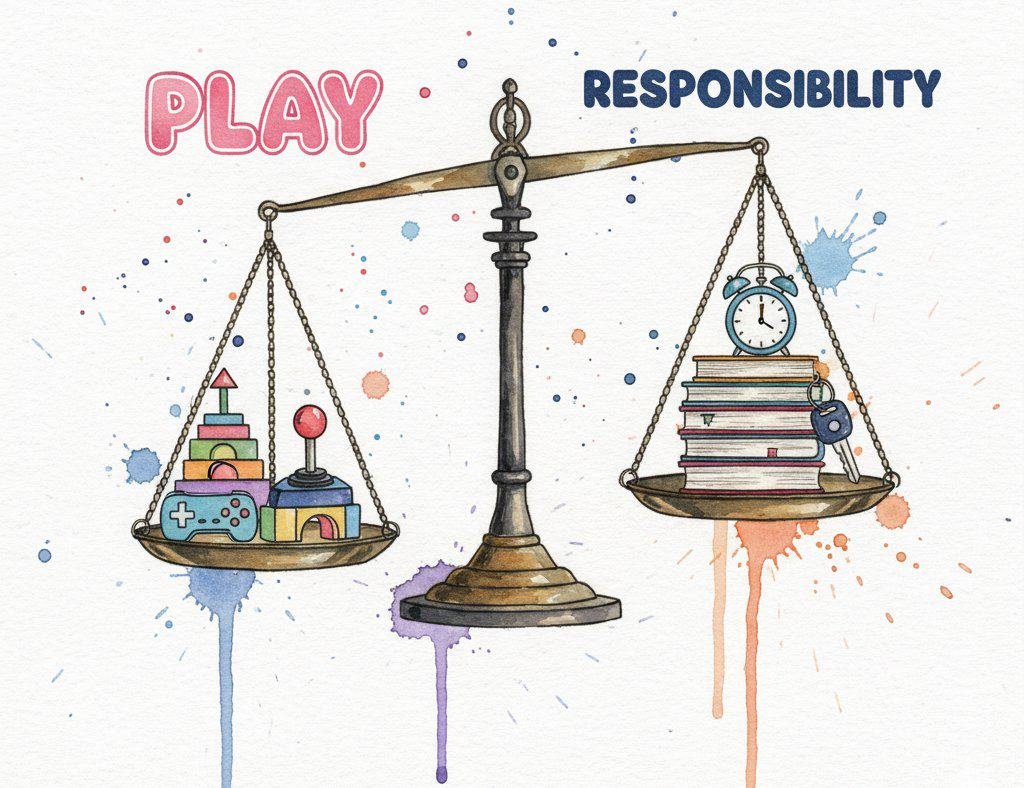
But maybe refusing to “act your age” in some areas is its own kind of wisdom. Maybe there’s value in keeping one part of life dedicated to pure play, especially when everything else feels weighted with responsibility.
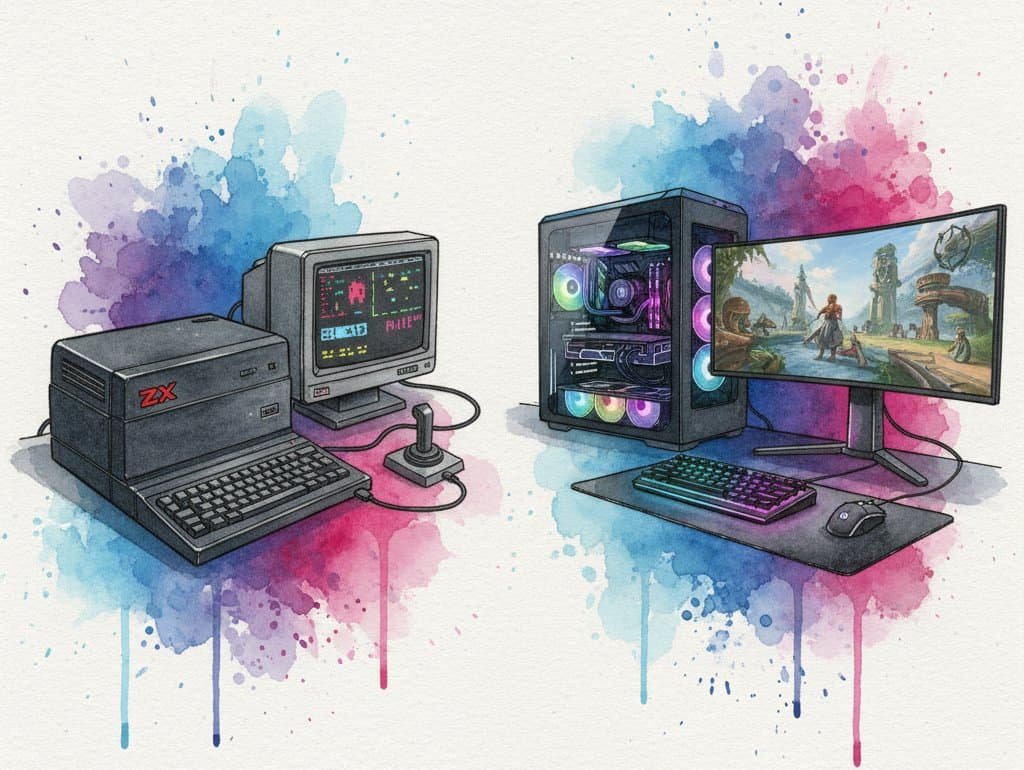
I grew up playing games on a Sinclair ZX Spectrum in the 1980s; primitive graphics and simple gameplay. The kid who started there never imagined what would eventually be possible. In some ways, continuing to game keeps me connected to that younger version of myself who was endlessly curious about technology and possibility. Maybe gratitude for the ability to still play is part of refusing to act your age.
What activities connect you to younger versions of yourself?
The Balance Nobody Gets Perfect
Gaming can become avoidance, of course. I’ve wrestled with devotion crossing into obsession before, so now I try to stay honest about why I’m playing.
Am I decompressing after a productive day? Or am I hiding from something that needs attention? The answer varies, and I try to pay attention to the difference.
Too much of anything can become a problem. With gaming, we need to keep a balance or draw a line. But figuring out where that line is? That’s the ongoing challenge with anything we enjoy.
How do you tell the difference between healthy recreation and unhealthy avoidance?
Why I’m Telling You This
I’m not suggesting gaming is the answer to life’s challenges. But I am suggesting that play, real, purposeless, slightly ridiculous play, might be more essential than we think, even when we’re supposed to be serious adults with serious concerns.
If you’ve been curious about gaming but dismissed it as “not for people your age,” maybe reconsider. If Apex Legends doesn’t interest you, maybe something else does. The barrier to entry is lower than you think: decent internet, moderate computer, and you’re in.
But more broadly: What have you stopped doing because you thought you were too old? What would you try if you stopped worrying about looking foolish or wasting time or not being good enough?
Life is short and gets shorter. The “responsible adult” part takes up most of our time and energy. Maybe protecting some time for play, whatever play means to you, isn’t frivolous. Maybe it’s essential.
What would you do if you stopped worrying about whether you were too old for it?
Related reflections on OldDogZeroTricks
If this idea resonates with you, you might also enjoy:
- Unexpected Gifts of Growing Older
- When Does Devotion Become Obsession?
- The Modest Dreams We Can’t Afford
The Real Invitation
I’m curious how others balance staying playful and feeling responsible. What activities make you feel connected to fun rather than duty? Have you found ways to play that don’t feel like time stolen from important things?
Maybe you’re one of us older gamers too and understand this exactly. Maybe your version is completely different, woodworking, dancing, collecting something weird, playing an instrument badly. Did you completely give up video games for some reason?
I’m interested in your experience. Do you make time to completely relax without needing to achieve anything?