

The holidays look different when you’re not part of a traditional family setup. You’ve built a life that works for you, but there’s still this low-level tension – the slight awkwardness when explaining your choices, the guilt about not doing more, and the awareness that time with aging parents is running out. You can be mostly at peace with non-traditional holidays and still feel the pull of obligation. This post is about navigating that tension honestly, not resolving it perfectly.
If your holidays don’t match what everyone expects and you’re wondering whether that makes you a bad person, this might help.
Table of Contents
When Your Holidays Don’t Match the Script
There’s this assumption baked into the holiday season: everyone has somewhere to be. Family to visit. Traditions to honour. A proper celebration that looks like the movies or the greeting cards.
But what if your holidays don’t look like that?
Maybe you’re working through Christmas because that’s your schedule. Or you’re thousands of miles from family, geographically or emotionally. Maybe the traditional setup just doesn’t exist for you anymore, and you’re mostly… fine with that.
For twenty years, I’ve spent Christmas Day teaching English in Japan. It’s a regular workday here. No decorations in my apartment. No big meal. Just teaching or farming, then my regular evening. When I call my family in the UK later, there’s always this slight awkwardness when I admit it’s just another Tuesday for me.
I try not to be a buzzkill by even mentioning it.
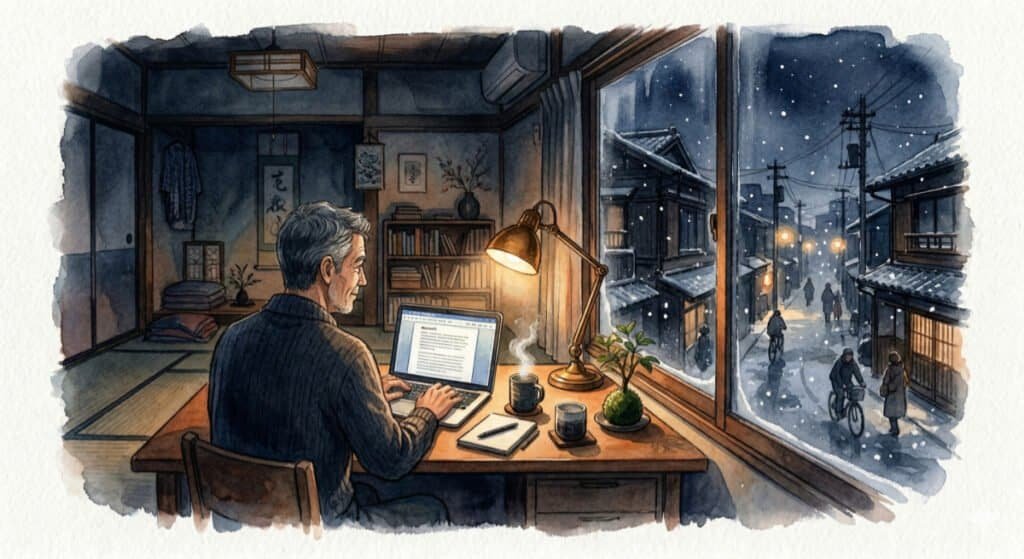
But I’m not the only one living holidays differently than people back home expect. You might be working because someone has to, or because you get extra pay. You might be alone by choice or circumstance. Maybe you’ve built a life that doesn’t include the traditional family gathering, and you’re okay with this season – but you wonder if you should feel guiltier about it than you do.
Does your holiday reality match what everyone assumes it should look like?
The Low-Level Guilt Nobody Talks About
Here’s what’s interesting about non-traditional holidays: you’re not sad or lonely, necessarily. You’re not wishing things were different. But there’s this low-level guilt you can’t quite shake.
Not guilt about what you’re doing. Guilt about what you’re NOT doing.
Not traveling home. Not creating elaborate celebrations. Not trying harder to maintain traditions. Not doing more to stay connected. Not being the person your family might expect you to be during this season.
During the holidays, if you’re not part of a traditional family setup, there’s this quiet expectation that your experience should be explained or apologized for.
You’re working? You must be sad about that. You’re not traveling home? You must be lonely. You’re fine with how things are? Something must be wrong with you.
But what if none of that is true? What if you’ve just adapted to the life you actually live instead of performing the life everyone expects?
In Japan, Christmas isn’t a national holiday. Most people work. Some buy KFC and cake as a novelty, but it’s not a big cultural moment. New Year’s is what matters here, and even then, my tradition is simple: walk in the cold on New Year’s Eve, hand-deliver two cards to my two bosses’ homes. That’s it. That’s my celebration.
But adapting to where you live can make you feel like you’re betraying something. Like you should be doing more to honour where you came from, to stay connected to your roots, to prove you haven’t completely lost touch.
Except here’s what I’ve learned: adapting to where you actually live isn’t betrayal. It’s just honest.
The guilt doesn’t come from what you’re doing. It comes from other people’s assumptions about what you should be feeling.
Why “Comfortable Distance” Works (Until It Doesn’t)
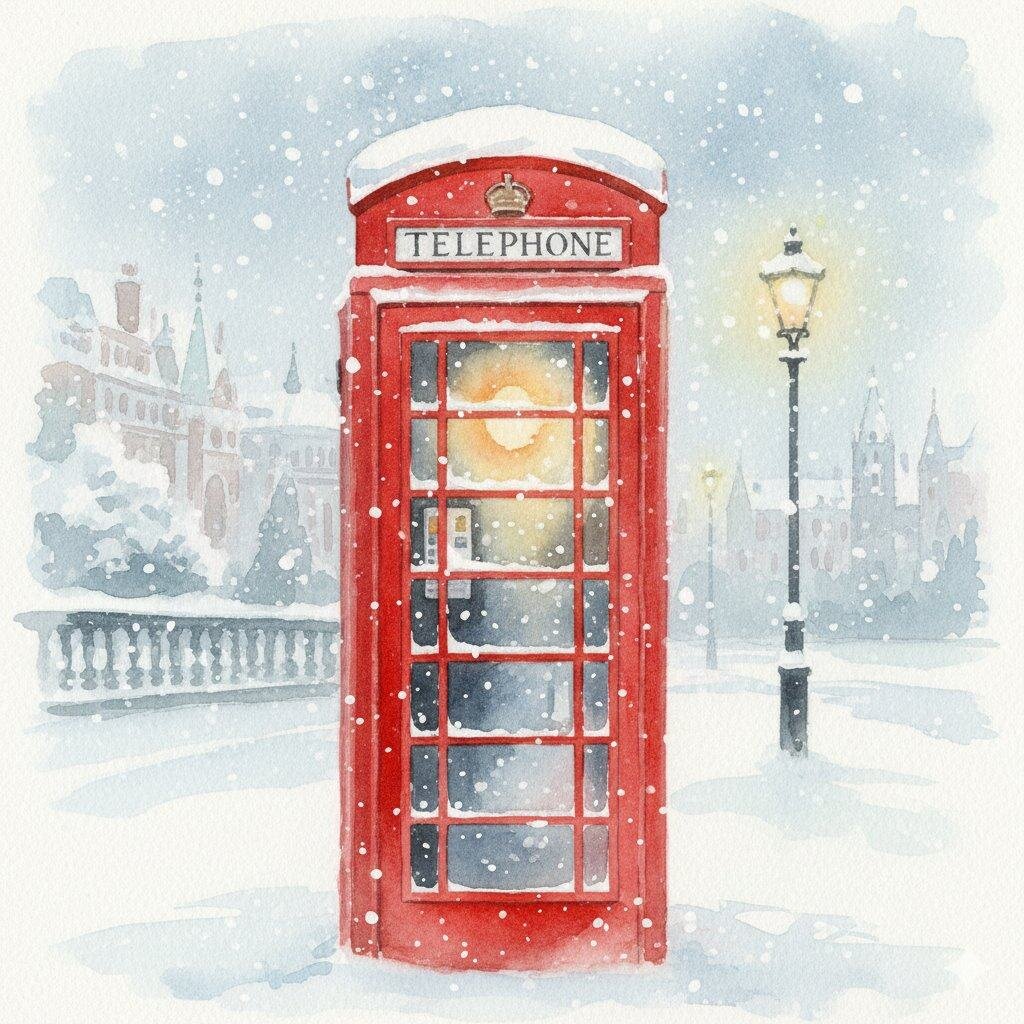
Distance during the holidays takes different forms. Geographic distance – thousands of miles between you and family. Emotional distance – same town, but the connection isn’t there. Circumstantial distance – schedules don’t align, budgets don’t stretch, life got complicated.
For years, my family and I maintained what we call “comfortable distance.” A card as the minimum sign of respect. Occasional phone calls. No pressure for expensive gifts or elaborate plans.

It worked because we all understood the reality: I live in Japan, they’re in the UK, and crossing that distance for holidays isn’t simple or cheap.
Comfortable distance is a beautiful thing when it works. Everyone’s expectations are managed. Nobody feels guilty. Nobody feels abandoned. You maintain connection without the pressure of performing closeness you don’t actually feel.
But comfortable distance gets complicated as people age.
My father is in his mid-eighties. My mum has dementia and lives in a care home. My sister keeps me updated on their situation, and there’s this growing awareness that “comfortable distance” might not be an option much longer.
That’s the thing about holidays when you’re far from family – it works fine until suddenly it doesn’t. Until someone gets sick or time runs out or you realize that the flexibility you had is slowly disappearing.
You can maintain comfortable distance for twenty years and then wake up one day realizing you have maybe five Christmases left with your dad. And suddenly the arrangement that felt peaceful starts feeling… different.
Not wrong. More complicated. Weighted with awareness that time is finite and decisions you make now might be ones you live with later.
You might be experiencing something similar. Parents aging. Family dynamics changing. The comfortable arrangement that worked for years starting to feel less comfortable as circumstances shift and you’re aware that responsibility looks different than it used to.
There’s no easy answer. Just the awareness that being far away might feel different as time moves forward, and what felt like freedom starts carrying questions you didn’t have before.
What You’ve Actually Let Go Of
Here’s what I don’t miss about traditional holidays:
The pressure to show up even when you don’t want to. The obligation to perform enthusiasm you don’t feel. The family drama that so many people dread this time of year. The expense of gifts nobody needs. The forced cheerfulness when everyone’s actually stressed or sad or just not in the mood.
The constant negativity – focus on bad news, complaints about weather and politics and how everything’s getting worse. Disconnecting from that narrative is surprisingly freeing.
Having to justify your choices or your life to relatives who don’t understand why you live the way you do.
When students here ask about my holiday plans, I’m upfront: staying home, working, keeping to my simple routine. Some older students wonder why it’s been so long since I visited the UK. But we’re all different. I don’t justify my choices.
There’s still a bit of pressure when I talk to my family, though. I want them to feel comfortable, to know I’m okay. But as we all get older, hopefully we worry less about performing the right version of our lives and can just be ourselves.
Letting go of holiday pressure doesn’t mean you don’t care. It just means you’ve decided what’s worth your energy and what isn’t.
The Difference Between Peace and Indifference
I’m mostly at peace with how my holidays look. Not indifferent – that’s not quite right. Peace and indifference aren’t the same thing.
Indifference would mean I don’t care at all. That holidays could happen or not happen and it wouldn’t register.
But peace means I’ve made my choices and I’m comfortable with them, even when there’s still some tension around the edges.
I work on Christmas Day and that feels fine. Those small gestures of appreciation to my bosses feel genuinely meaningful. Calling my family back in the UK carries a slight awkwardness, but we handle it. And stepping out into the quiet chill of New Year’s Eve clears my head.
If my schedule balances – computer time at home, work, exercise on the farm, teaching in the classroom – it’s all good. I dream about things constantly: projects, possibilities, the motorcycle I might buy someday. Those dreams exist within a simple, steady life that doesn’t revolve around holiday milestones.
That peace doesn’t mean I’ve resolved everything perfectly. It doesn’t mean there’s no guilt or no awareness of aging parents or no slight discomfort when explaining my choices to people who don’t understand them.
It just means I’ve accepted that my holidays look how they look, and that’s honest for the life I’m actually living.
You might know this feeling. The holidays approach and you’re just… okay with it. Not thrilled, not dreading it, just accepting that this season will look however it looks and that’s fine.
That doesn’t mean you’re broken or disconnected. It might just mean you’ve found peace with a life that doesn’t follow the script – even if that peace includes some complicated feelings you don’t fully resolve.
Are you at peace with your holidays, or just telling yourself you should be?
What Actually Matters
Sending cards home is our agreed minimum. Showing up for work on the 25th is simply my reality here. Finding a quiet moment to reflect as the old year turns into the new is all the tradition I need right now.

None of it looks particularly special from the outside. But all of it is honest. All of it fits the life I’ve built rather than forcing a celebration that doesn’t fit.
Some people thrive on big family gatherings and elaborate traditions. Some find deep meaning in the religious context. Some love the decorations, the meals, the whole production.
If that’s you, that’s great. Many of us maybe started there, but time or circumstances changed things, or we just evolved along the way.
But if your holidays look nothing like that – because you’re working, or distant, or just doing your own quiet thing – that’s valid too. It doesn’t mean you’re missing out or failing at something fundamental.
It means you’re living honestly within the circumstances you’ve got.
The question isn’t whether your holidays look “right.” The question is whether they’re honest. Whether they fit your actual life and values instead of someone else’s expectations.
The Tension You Don’t Have to Resolve
Here’s something nobody tells you: you don’t have to resolve this perfectly.
You can make peace with non-traditional holidays AND still feel some guilt about not doing more.
You can be content with your simple routines AND still aware that time is running out with aging parents.
You can be fine with working through Christmas AND still feel that slight awkwardness when explaining it to family.
These tensions don’t need to be fixed. They’re just part of living a life that doesn’t match what everyone expects.
The goal isn’t eliminating all discomfort. The goal is being honest about what you’re actually feeling instead of performing peace you haven’t fully found or guilt you don’t genuinely feel.
For me, that honesty means I’m mostly at peace with my non-traditional holidays. I’ve adapted to life in Japan. I’ve let go of most holiday pressure. But there’s still some guilt, some awareness that this comfortable distance is getting more complicated, some tension I’m living with rather than resolving.
And that’s okay. That’s just what it looks like to live far from family during the holidays while time makes every year feel more weighted than the last.
You don’t have to figure this out perfectly. You just have to be honest about where you actually are with it.
Your Experience
Your holidays might look completely different from mine. You could be working right through them, or video calling family from thousands of miles away. Some of you are spending the day alone and genuinely okay with it, keeping connections minimal because that’s what’s realistic.
Perhaps you’ve let go of the pressure entirely, finding peace in simple celebrations that fit your actual life.
But many of us are still navigating that complicated space between being mostly okay with how things are and feeling guilty that we’re not doing more. Between comfortable distance and the awareness that time is running out. Between peace and a tension that won’t fully resolve.
Either way, I’m curious about your experience.
How do you navigate holidays when your reality doesn’t match what everyone expects?

Related Reads on OldDogZeroTricks

Grant Barker here (aka OldDogZeroTricks). I’m a British expat living in Japan, teaching English, growing vegetables, and writing honestly about aging, purpose, and figuring things out – without the BS.
This blog is where I talk about the stuff most people keep to themselves – the embarrassing truths, the questions we don’t ask out loud, and what it feels like to keep going, one ordinary day at a time.