
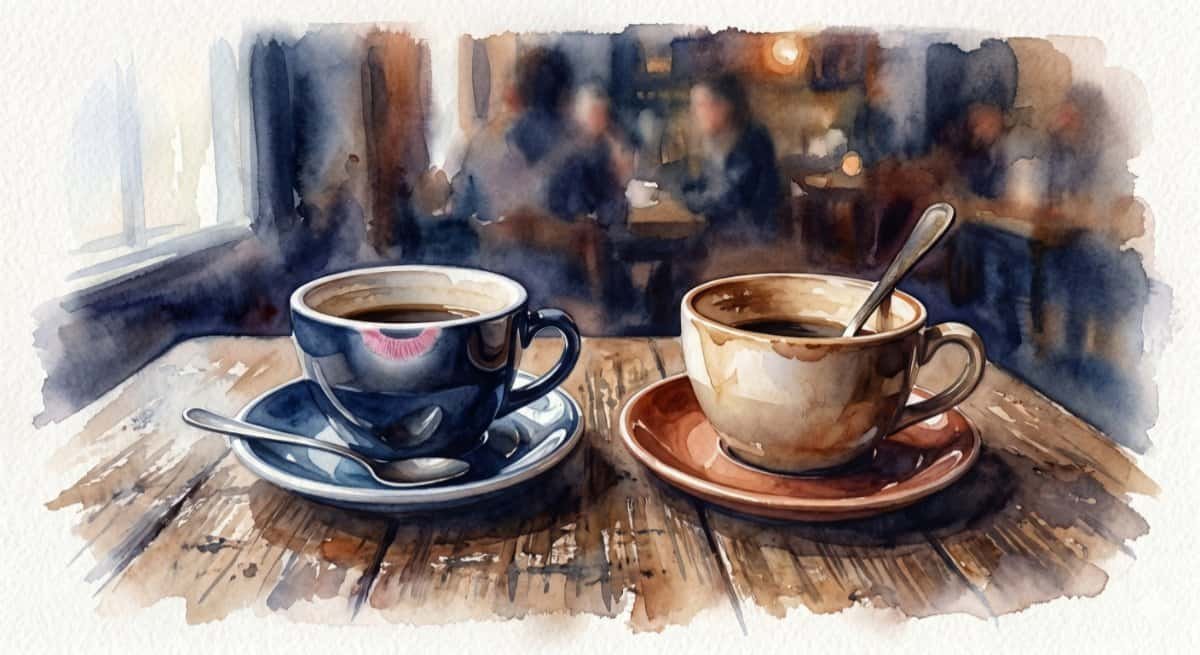
Most of us have wondered this at some point – usually after the dust has settled on an argument, or when something in a relationship just didn’t quite add up. Do men and women actually love differently?
The honest answer is yes, probably. But not in the ways we’re typically told.
This isn’t about pointing fingers, and it’s not a biology lesson. It’s just an open conversation about something most people feel but rarely say out loud.
Table of Contents
The Question We’ve Always Danced Around
Nobody really wants to answer this one honestly. It feels like a trap. Say yes, and you’re stereotyping. Say no, and you’re ignoring something most people have quietly noticed their entire lives.
So let’s just agree not to trap each other and actually look at it.
Men and women seem to want different things from love. Not always. Not universally. But often enough that you’d have to be deliberately covering your eyes to miss it. The question isn’t whether one gender loves better, or deeper. It’s more about what love is actually for – and whether we’re all working from the same dictionary.
Maybe we’re not.

Where Biology Enters The Picture
Before culture got involved, biology had already drawn a few lines.
Women carry children. That single reality can leave a heavy mark on how love, safety, loyalty, and attachment work. It doesn’t make them better or worse at love; it just means love may come with an internal hierarchy that men don’t always understand. And some version of that hierarchy may still exist even when there are no kids involved.
Men are wired differently. The instinct to provide, to protect – for a lot of men, that’s the primary language of love. Not words. Not deep, late-night conversations. Just showing up. Staying. Doing the heavy lifting when things get hard. That’s how it gets expressed, even when nobody reads it that way.
Neither is a flaw. They’re just different ways of trying to keep love alive. The problem is, we rarely tell each other what love looks like from where we’re standing.

How the Language Changed
Something shifted somewhere along the way.
Nobody really “dates” anymore. People are seeing someone, which can mean anything from early romance to a casual arrangement nobody wants to name too clearly. The language got casual because the intention got casual – and maybe that’s just honest. Maybe the old narrative of forever, unconditional love, and the one-true-love was always a bit fragile anyway.
Or maybe we lost something real and dressed the loss up as progress. I’m not sure which it is. Possibly both.
What I do notice is that when the language softens, the expectations soften with it. Which protects everyone. And costs everyone something, too.
Maybe Love Is Not One Thing
When asking do men and women love differently, part of the problem is that we talk about love as if it’s one clean emotion.
But love can mean loyalty. Desire. Duty. Safety. Being chosen. Being useful. Being seen. Being needed. Being free enough to stay.
Two people can say “I love you” and mean slightly different things. Neither has to be lying for that to become a problem.
How Men Tend to Love
Men don’t talk about their partners much. Not to other men, anyway.
That silence easily gets misread as indifference, but it’s usually the opposite. There’s something in a lot of men that treats the person they love as entirely private. Not a secret – just not public property. Not a topic for the group chat.
Whether that’s quiet loyalty or just conditioning is a fair question, but it doesn’t feel like coldness from the inside.

Men tend to love through presence rather than expression. Showing up. Not leaving. Fixing what’s broken. These aren’t grand, cinematic gestures, but they aren’t nothing. The risk is that they become invisible over time. And invisible love is easy to undervalue, or leave without fully realizing what was there.
Of course, there’s another side to this. Quiet love can become so quiet that the other person starts to feel alone inside it. Being reliable matters, but if nothing is ever said, nothing is ever named, and nothing is ever opened up, love can start to feel more like maintenance than intimacy.
That’s where a lot of men get caught. They think they’re proving love by staying steady, while the other person is quietly wondering why the relationship feels emotionally empty.
Maybe both things can be true. Maybe showing up matters more than we admit. And maybe showing up still isn’t enough if the other person never feels properly seen.
How Women Tend to Love
This is where it gets complicated, and where most people stop being honest.
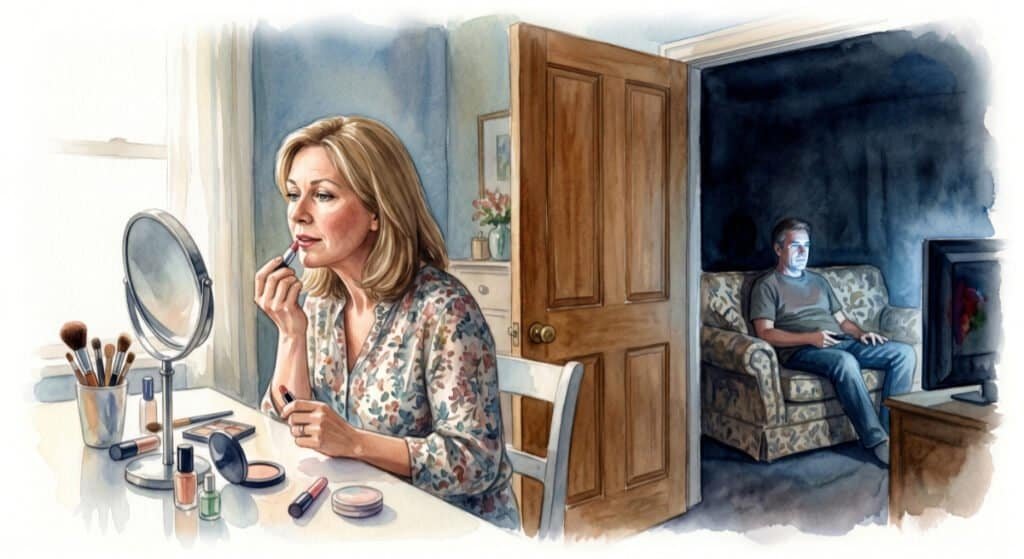
My sense is that many women are more willing, or perhaps more forced, to notice the practical side of love. Does this work for my life? Does this person make things better or harder? Is this going to hold?
Men do this too, but it seems closer to the surface in women. Maybe because historically they had more at stake in choosing poorly. Maybe because life taught them to ask practical questions before romance got too loud.
Some women seem to love within that kind of hierarchy, whether they would describe it that way or not. If there are children, they often move to the top. Security matters. Peace of mind matters. The relationship still matters, but it may not sit where the man assumed it did.
That doesn’t mean the love is fake, or shallow, or cold. It just means love may be sitting inside a wider structure of responsibility, safety, and self-protection.
The friction sparks when the man assumes he’s at the absolute top of that list, and builds his entire world around that assumption.
A lot of relationship endings make more sense once you see that mismatch.
It’s a Jungle Out There
Love is not a level playing field.
We come to it with different wiring, different needs, different histories, and completely different ideas of what the word even means. We perform it sometimes more than we feel it. We protect our own version of the story inside it.
We also come to it with different cards in our hand.
Some people know they have money, status, beauty, sex appeal, stability, youth, confidence, or a lifestyle someone else might want. Others feel they don’t have much to offer, so they cling harder, compromise more, or pretend not to care as much as they do.
That changes the stakes.
It doesn’t mean love is fake. It just means love doesn’t exist on its own. People know, even if they don’t say it out loud, what they think they’re offering and what they think they’re risking. That quiet calculation can sit underneath the romance, shaping who feels secure, who feels replaceable, and who feels they have to work harder to be chosen.
We go in hoping the other person is playing the same game and find out later, sometimes years later, that they weren’t.
None of that makes it not worth it. It just makes honesty a lot more useful than romance.
The old idea of “the one,” the forever person, is not that it’s wrong exactly. It’s that it was always more complicated than the fairy tale suggested. People change. Priorities shift. What someone needs from love at twenty-five may not be what they need at forty-five, or sixty-five.
Maybe the most sensible thing two people can do is stop assuming they share the same definition and actually talk about it.
It’s a jungle out there. But most of us still want to find someone to walk through it with.
So, Do Men and Women Love Differently?
Yeah. Probably.
Not in every way. Not in every relationship. But enough that pretending otherwise doesn’t help anyone.
Men tend to love quietly and consistently – through action rather than expression. Women tend to love within a structure that includes, but doesn’t always center, the relationship. Neither is wrong. But they’re different enough that without some honest conversation, two people can spend years feeling quietly let down without ever knowing why.
The word love might be the biggest part of the problem. We use it like everyone downloaded the exact same definition. But your version was shaped by your biology, your childhood, your wins, and your losses. So was theirs. A lot of heavy friction lives in that gap.
We’re all free spirits underneath it all. Maybe that’s the part that’s the same for everyone. Under all the wiring, history, fear, pride, and performance, most of us want to be known rather than just needed.
The trouble is, we don’t always know how to ask for that. So we call it love and hope the other person understands what we mean.
What’s your take – do you think men and women love differently, or do we just show it differently?
If any of this rang true – or rang completely false – I’d like to know. Pull up a chair and share your thoughts below. I respond to every comment, and your experience will probably help others a lot more than mine.

Related Reads on OldDogZeroTricks
- When Love Isn’t Enough
- The Balance Between Talking About Pain and Getting On With Life
- We Got Divorced But Kept Living Together

Grant here (aka OldDogZeroTricks). I’m a British expat living in Japan, teaching English, growing vegetables, and writing honestly about aging, purpose, and figuring things out – without the BS.
This blog is where I talk about the stuff most people keep to themselves – the embarrassing truths, the questions we don’t ask out loud, and what it feels like to keep going, one ordinary day at a time.