
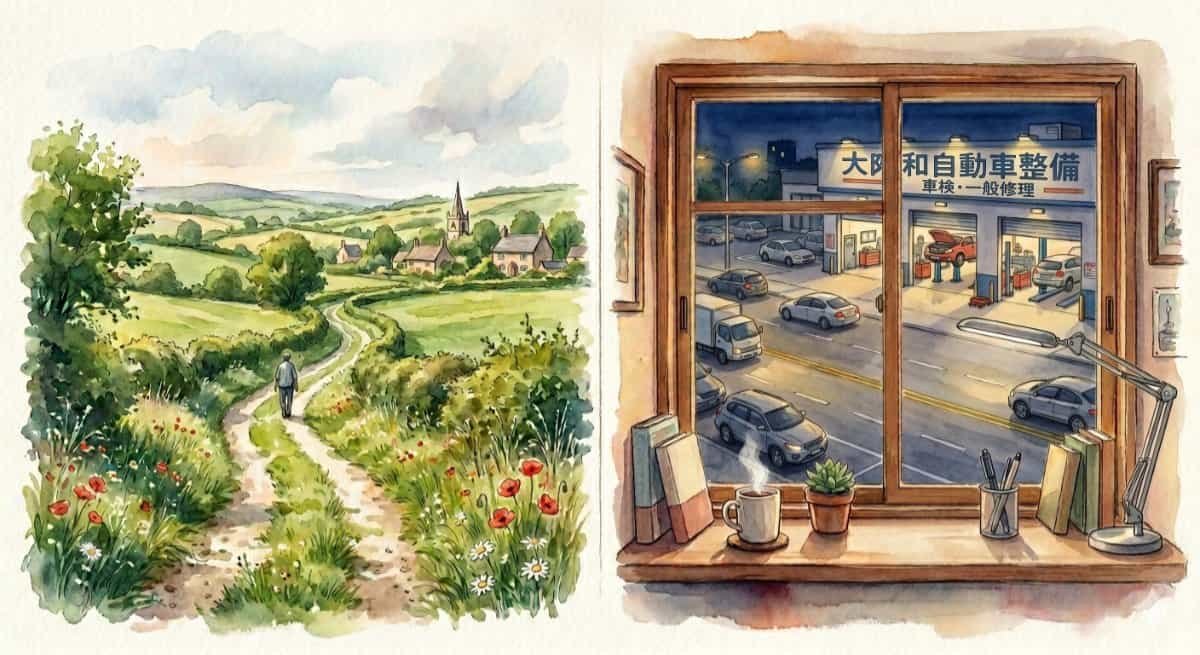
I just spent two weeks in the UK in my father’s beautiful countryside community bungalow – the kind of place people aspire to have. Quiet. Spacious. Comfortable. But I couldn’t wait to get back to my dated Japanese apartment by a busy road. Sometimes, choosing the life that fits means accepting that it might look “less than” from the outside.
If you’ve ever felt pressure to want something that doesn’t actually suit you, this might resonate.
Table of Contents
The Place I Thought I’d Want
My father lives in a beautiful bungalow in the British countryside. Spacious rooms. Peaceful surroundings. Fields and woodlands stretching out in every direction. The kind of home that makes my Japanese apartment look shabby by comparison.
I slept better there than I have in years. Perfect quiet. A comfortable mattress. No traffic noise, no sirens, no city chaos bleeding through thin walls at 3 AM.
For two weeks, I experienced the kind of living situation people work their whole lives to achieve. The kind of place you’re supposed to want – especially at 57, when comfort and security should start mattering more than adventure or possibility.
My uncle even suggested I move back to the UK. The implication was clear: why stay in Japan, scraping by in a cramped apartment when you could have space, family nearby, the familiar culture you grew up in?
It’s a reasonable question. The kind that makes sense on paper.
Before that trip, moving back to the UK still felt like the obvious next chapter. Now it feels more like a real option in the background, not the life I’m supposed to be rushing toward.
But here’s what surprised me: I couldn’t wait to come home.
Not because the UK was bad. Not because my father’s place wasn’t lovely. But because after a couple of weeks in beautiful, quiet comfort, I realized something I hadn’t fully understood before.
I don’t actually want what I thought I wanted – at least not in the way I imagined. It turns out, choosing the life that fits is more important than choosing a life that looks good.
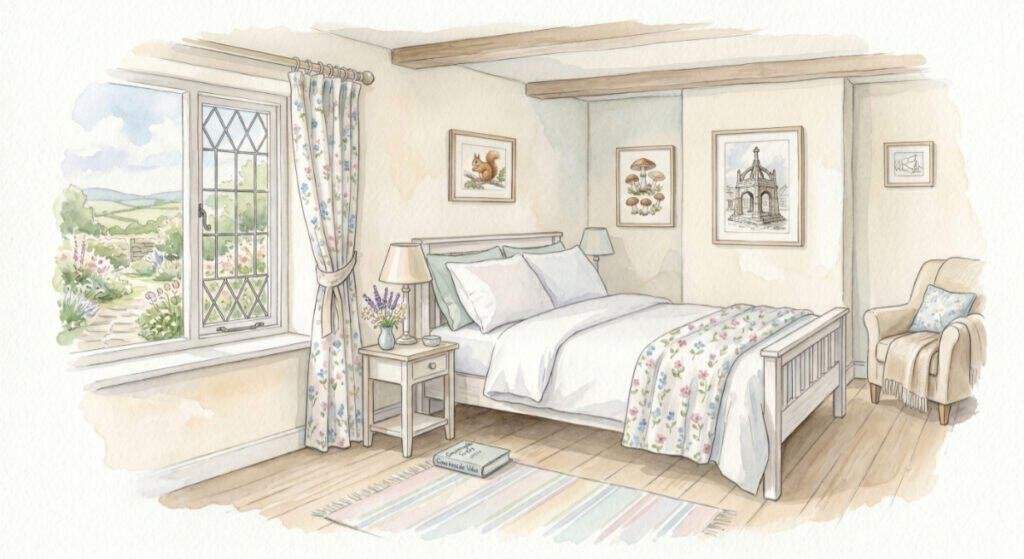
A Life That Doesn’t Look Impressive
Let me be honest about where I live in Japan.
The apartment has vinyl flooring from probably the 1970s in the kitchen and living area. It sits right on a busy main road – constant traffic noise, exhaust fumes, the urban chaos of a working-class neighborhood. I live paycheque to paycheque. There’s nothing impressive about it.
If someone visited, the dated flooring would be the first obvious thing they’d notice. It would shock people to think I’ve lived like this for so many years – that this is what two decades in Japan looks like for me.
It’s not the life I imagined at 57. It’s not what my father has. It’s not what my sister has. It’s the kind of living situation people apologize for or explain away.
But here’s the thing: this is where my actual life is.
My students. My farming work. My morning walk to 7-Eleven for coffee. My cycling route to work. The rhythm and routine that give me purpose and structure. The freedom to be myself without constant explanation or performance.
All of that is here, in this unremarkable apartment in this working-class area of Japan.
And when I was sitting in that beautiful countryside bungalow getting the best sleep I’d had in years, I found myself craving this place. Not the apartment itself – the life that happens here.
What part of your life looks “less than” but actually works for you?
What Nice Surroundings Can’t Give You
The countryside was beautiful. Peaceful. Miles of fields, woods, farmland stretching in every direction. Space to breathe. Quiet that feels almost unreal if you’re used to city noise.
But after a while, I felt restless in a way I didn’t expect.
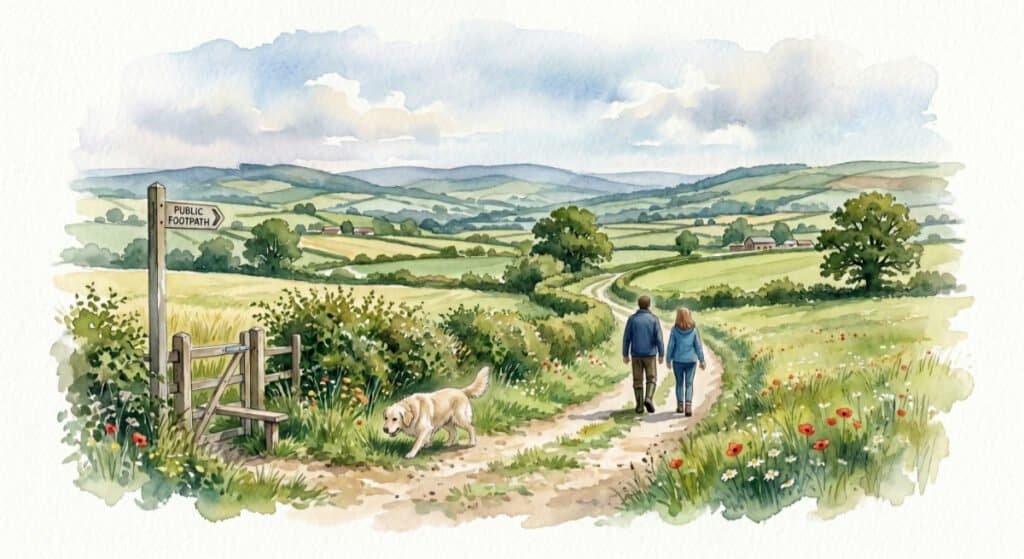
Tons of space to walk the dog with my sister. There was nothing wrong with the place itself. I just couldn’t picture a version of my daily life there that felt like mine.
I don’t take anything for granted, but the truth is: if it ain’t broke, why fix it?
There was something else I noticed during those two weeks. I noticed how much time away has changed me. Conversations that once felt familiar now felt slightly out of step with how I see things.
I’ve realised I tend to need a bit more openness in how things are approached. Even small enthusiasms – like my motorcycle obsession – didn’t quite land the same way.

It’s not that they’re wrong. It’s just that after two decades in Japan, I’ve gotten used to a different kind of interaction. One where my unconventional choices don’t immediately get shot down.
The countryside would be ideal for a writer who needs to disconnect from the world. And I am a writer, in a way – this blog proves that. But I need an active lifestyle to write about. I need things happening around me. I need the stimulation of teaching, farming, interacting with students and bosses, cycling to work through city streets.
Sleep is great. Beautiful surroundings are lovely. Material comfort matters.
But you still have to wake up to something. You still need a reason to get out of bed that isn’t just “enjoy the quiet.” The Japanese have a word for this – ikigai – the intersection of what you love, what you are good at, and what the world needs.
Having purpose, people, something to do each day – that matters more than just having a nice place.
For me, those things aren’t abstract. They look like students, farm work, cycling to lessons, and the small routines that keep the day from floating away.
The Relief of Coming Home
When I got back to Japan, one of the first things I did was reach out to my bosses and students to confirm the usual schedules.
That felt good. Better than good, actually. It felt like reconnecting with the reason I’m here.
There’s purpose in Japan. A reason to show up. Students who’ve been coming for years, not just for English lessons but for real conversation. Farming work where I’m trusted and needed. A routine that grounds me even when everything else feels uncertain.
I also came home motivated to tidy up my apartment and live with more intention here. Seeing my father and sister’s somewhat casual attitude about things reminded me that I probably overthink everything. But it also reminded me that this rented space – however dated and unremarkable – is mine. And if I’m choosing to stay here, I should actually care for it properly.
Not to impress anyone. Just because it matters that I show up for myself, even in small ways like keeping the place decent.
The motivation isn’t about impressing anyone. It’s about treating this life with the respect it deserves.
I realised the family is more settled than I’d imagined. My father has my sister nearby enough, and it suits her to spend time there occasionally. The family is managing. I’d be there, but it wouldn’t really be my life.
But here? I have students waiting for lessons. Bosses who trust me with work. A routine that depends on me showing up. That matters more than I realized until I spent two weeks where none of that existed.
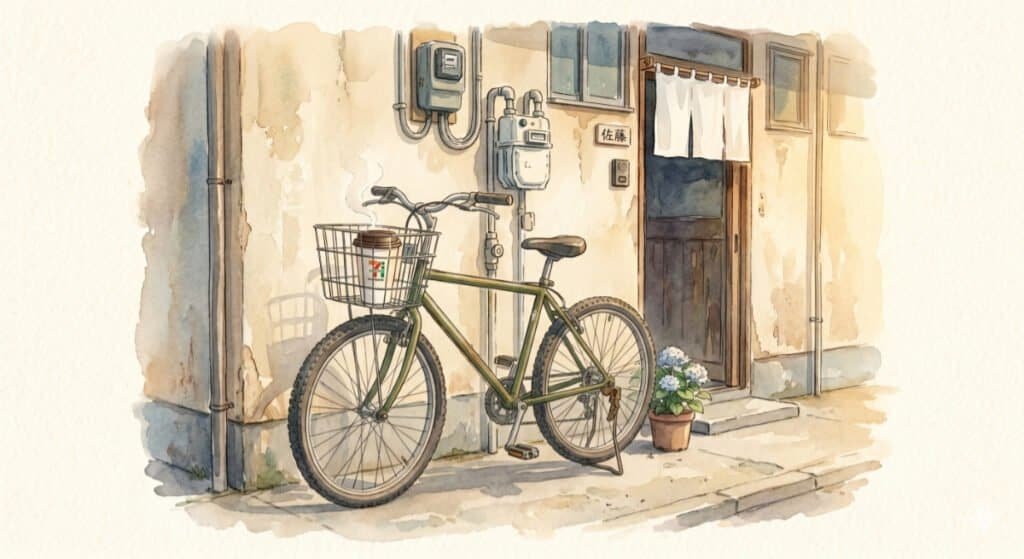
So I’m keeping my options open – things can change quickly. But right now, what I came back to feels clear. Since returning, I’ve been reminded that I’m part of something here, that people want me involved. That’s not easy to walk away from. I’ve written before about needing a sense of purpose after loss. Right now, this is where I feel that.
When Others Don’t Understand Your Choices
At the wake after my mother’s funeral, I met most of my father’s neighbours. Really nice people, curious about my life in Japan. Their questions were fair, but answering them started to feel like explaining a life that doesn’t fit the usual template for a guy my age.
I’m okay with those facts. My Japanese counterparts seem okay with me. But explaining your unconventional choices to people who expect conventional success gets exhausting.
My uncle suggested I move back. The message from family was clear: it might be time to focus on what’s in front of me and move on from the past. The implication was there: what am I still doing over here?
I get it. And it was lovely being around family for the first time in ages!
From the outside, my life probably looks like I’m settling for less. Like I gave up on achieving something more impressive. Like I’m stuck in a situation I should be trying to escape.
But I’m not stuck. I’m choosing this for now.
I value the freedom to be myself and a sense of purpose more than material comfort. I value daily engagement over impressive surroundings. I value the specific community I’ve built in Japan over the familiar culture of the UK that no longer quite fits me.
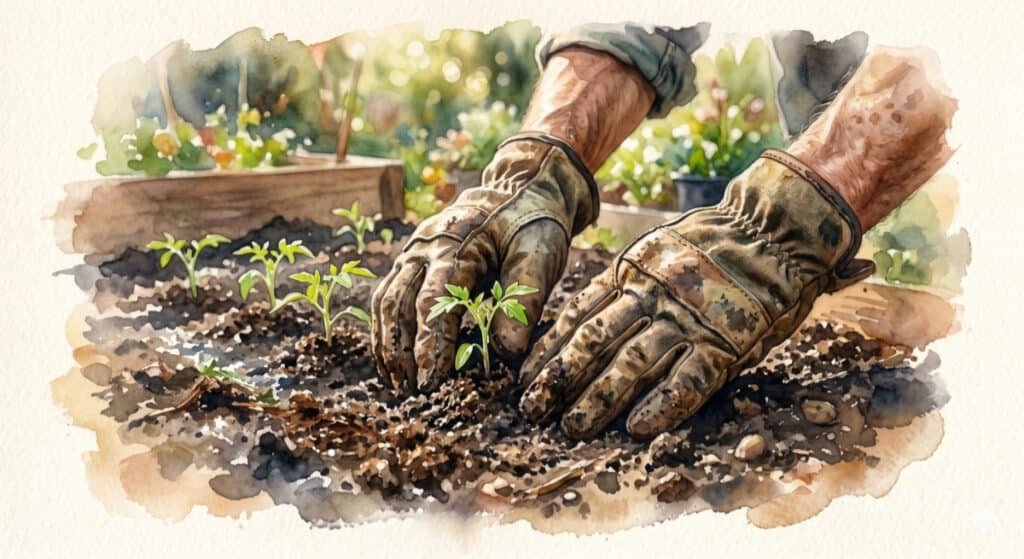
Not everyone understands that. And that’s fine. But the pressure to want what others think you should want – that’s real. And it’s worth questioning.
Do you ever feel pressure to want a life that doesn’t actually suit you?
You Can’t Have Everything
Here’s what I realized sitting in that beautiful countryside bungalow:
You can’t have it all. Not because you’re failing, but because real choices mean trade-offs.
I could move back to the UK. Live near family. Have great neighbours. Have access to countryside peace and a nicer living space. But I’d be giving up the daily purpose that keeps me engaged – the teaching, the farming work, the routine I’ve built over 20 years.
I could chase higher-paying work in Japan to upgrade my apartment. Get a newer place with modern flooring, maybe in a quieter area. But that would mean leaving the location that’s close to my jobs, the students I’ve taught for years, the community I know.
Most people spend years wanting everything. The nice house AND the meaningful work. The impressive life AND the authentic relationships. Material comfort AND daily purpose.
I respect those wants. They’re not wrong. But for most of us, we eventually have to prioritize choosing the life that fits over trying to have it all.

That means living in a dated apartment. Tight finances. Explaining to people why I don’t have what they think I should have at my age.
But it also means waking up most mornings with a reason to get out of bed. Work that matters. People who need me. A routine that grounds me.
I can live with dated vinyl flooring if it means I don’t have to trade it for a life that, for me, would feel a bit too quiet and disconnected – even in a beautiful house.
Choosing the Life That Fits (Even When It Looks Like Settling)
From the outside, my life probably looks like settling.
At 57, still renting. No property. No impressive career. Living in a foreign country where I never quite mastered the language. Working jobs that don’t build toward retirement security.
If you measure success by material comfort, stability, and conventional achievement, I’m behind.
But if you measure it by daily contentment, purpose, and living a life that actually suits who you are – I’m doing fine.
I’m not settling for less. I’m choosing what works over what looks good. I’m choosing daily engagement over material comfort. I’m choosing the freedom to be myself over the pressure to meet other people’s expectations.
At 57, that’s not failure. That’s clarity.
I spent decades thinking I wanted certain things – nicer living situation, financial security, the kind of life that would make people nod approvingly when I described it. But when I actually encountered that life in the UK, I realized it doesn’t fit me.
What I have in Japan – however imperfect, however unremarkable from the outside – is the life that actually allows me to be myself. To have purpose. To engage daily with work and people that matter to me.
That’s not settling. That’s knowing what you actually value and having the courage to choose it even when it doesn’t look impressive.
What looks like “settling” from the outside but is something you chose?
Does Your Life Actually Fit You?
I’m back in Japan now. The traffic noise, the dated apartment, nothing material has changed.
But something internal has. I’m not apologizing for this life anymore – to myself or anyone else. I’m not wishing it looked different from the outside. I’m not measuring it against my father’s bungalow or my sister’s life or what people think I should have achieved by now.
I am finally choosing the life that fits. For the time being. And that’s enough.
What about you?
Have you ever realized you don’t actually want what you thought you wanted? Have you visited somewhere “nicer” and been relieved to come home to your own imperfect life? Do you ever feel pressure to want things that don’t actually suit you?

Related Reads on OldDogZeroTricks
- Why We Keep Chasing What Doesn’t Fit
- It’s All Relative (But Is That Comfort or Cop-Out?)
- Living Abroad vs Returning Home
Share your thoughts below. I respond to every comment, and I’m genuinely curious about what you’ve chosen that others might not understand.

Grant Barker here (aka OldDogZeroTricks). I’m a British expat living in Japan, teaching English, growing vegetables, and writing honestly about aging, purpose, and figuring things out – without the BS.
This blog is where I talk about the stuff most people keep to themselves – the embarrassing truths, the questions we don’t ask out loud, and what it feels like to keep going, one ordinary day at a time.